Showing posts with label religious education. Show all posts

Monday, November 24, 2014

The Faith of a Naturalist: a Book Post

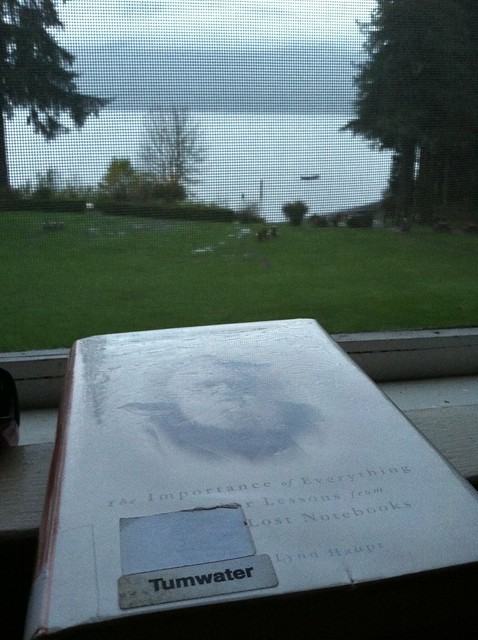
Darwin Book

Today is the anniversary of the publication of The Origin of the Species, by Charles Darwin.  As I regularly make it a practice to find good resources for my congregation and put them into calendars that mark dates like these, last month I checked out a bunch of Darwin books from the library.  Many I was already familiar with (One Beetle Too Many and The Humblebee Hunter are my favorite picture books, and I really like the YA novel Charles and Emma: The Darwins' Leap of Faith), but I also received a stack I had not read before and I had to choose just one as I didn't have time for them all.  My choice was a fortuitous one, and I am happy to say that Pilgrim on the Great Bird Continent: The Importance of Everything and Other Lessons from Darwin's Lost Notebooks by Lyanda Lynn Haupt is a most fascinating book.

Unlike other books about Darwin that I have read, this book focuses on the inner journey and his growth as a naturalist through the daily writings he kept on his trip aboard the Beagle.  Haupt is herself a student of ornithology, so she admits to focusing on his work with birds mainly because that was the part that interested her the most, but also because she thinks birds are one of the more accessible areas of nature study for the general public.  As I also like to casually watch birds, I found myself agreeing with her.

While there is a great deal of interesting science and history here, in the end it wasn't the science or the history of the book that was the real take-away for me.  Haupt describes what she calls "the faith of a naturalist" and uses examples from Darwin and from her own life and studies as well as a few interviews she conducts that were in some way related to her topic.  She weaves between the historical and the modern, the scientific and the philosophical, and it was a lovely and thought-provoking progression.

A few quotes:

In our own lives as homespun naturalists, the moments we do manage to spend becoming educated by our native places can wend their way into our daily lives, making it more and more difficult to see ourselves as individuals, self-sufficient and cordoned off somehow from our humus-y ground.  We begin to see, rather, our lives as embodied, unseparate, inseparable, rushing forward with the whole of wild life.
****************
Yet it is here, in the spaces between what can be seen and what can be spoken, that the naturalist's faith often lies.  This is why it is called faith.  Intimacy, residence, patience, a sense of dwelling alongside wild nature, earthen insight, gratitude, affection, kindness, a kind of grace, a kind of joy - all of these unutterable things find a place in the naturalist's task.


Monday, November 17, 2014

Christmas just keeps running over Thanksgiving

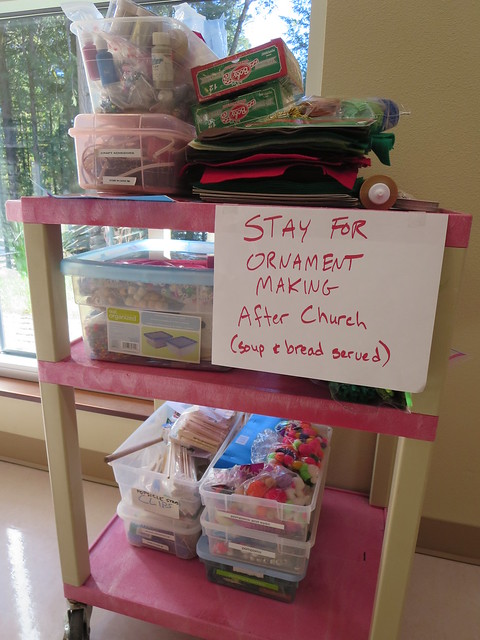
ornament making at church

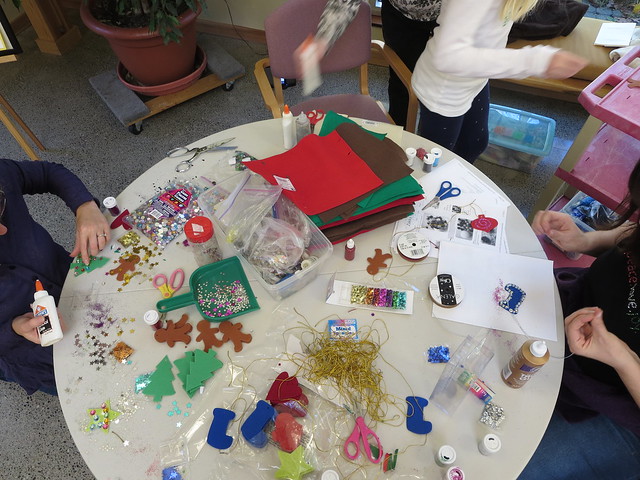
It's hard to keep Christmas at bay right now.  We've put away all of our Halloween decorations, and the little box of Thanksgiving decorations is always a disappointment to open compared to the multiple bins I have for Halloween and Christmas.  The kids are already working on Christmas songs for their music lessons, I've ordered my cards, made my plans, and we had an ornament making party for the Giving Tree project at church yesterday.

ornament making

I'm torn on this issue - on the one hand the Christmas Machine is just such a monster that it does need to be contained (and a simple Thanksgiving focused on gratitude for what we have is such a lovely thing it shouldn't get sacrificed to the beast) and then on the other hand the To Do list for December gets overwhelming and getting a jump on it makes it all much more manageable.

So I've done a few Christmas things.  But now,  to focus back on Thanksgiving and just tuck those things away!

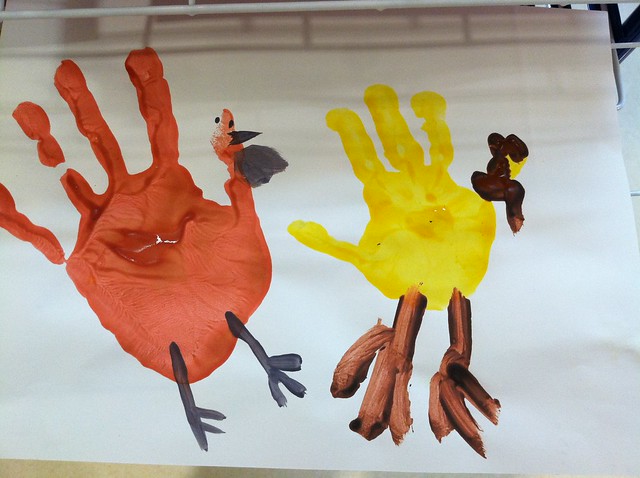
Back to the Turkeys!

handprint turkeys

Monday, September 29, 2014

The Fun Five: Five Fun Extras in Our Homeschool Last Week

Education is not all just math pages and history books.  There is learning that takes place off the page, out in the world, and sometimes spontaneously.  Play and Imagination, Nature and Friends, and Fun are all part of everyone's education, and here is what that has looked like in our homeschool recently:

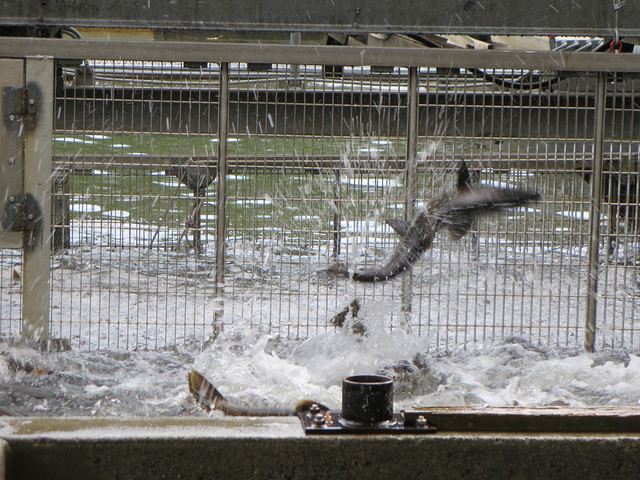
1.  We went to see the salmon run and harvesting at a local river

Salmon jumping

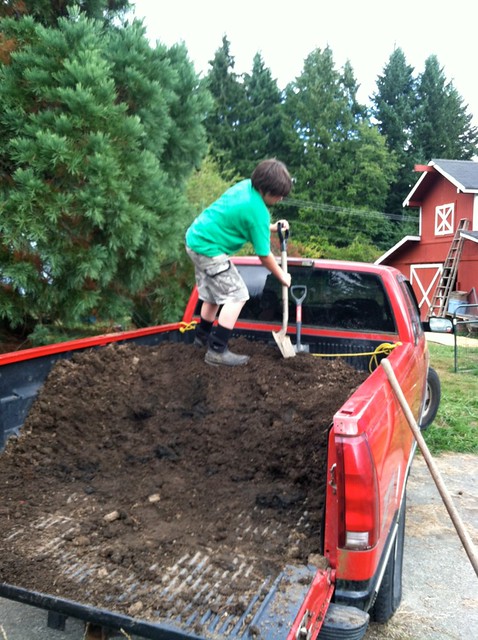
2.  Chores on our little hobby farm always provide opportunities for real world learning

IMG_3370

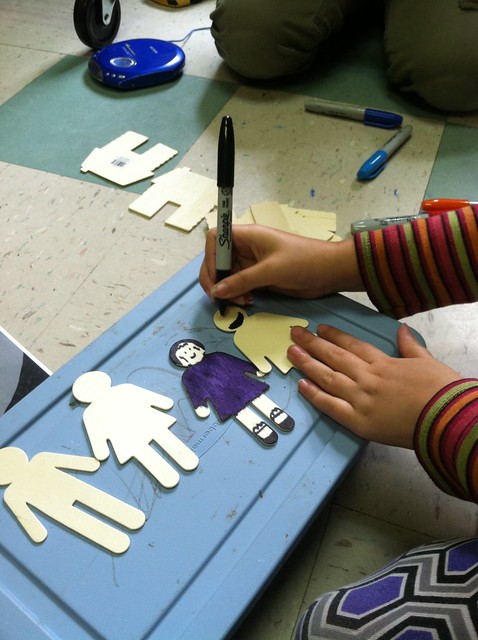
3.  The kids go to work with me at church, and sometimes they get to help with things like creating a Spirit Play story basket.

Making a Spirit Play Basket

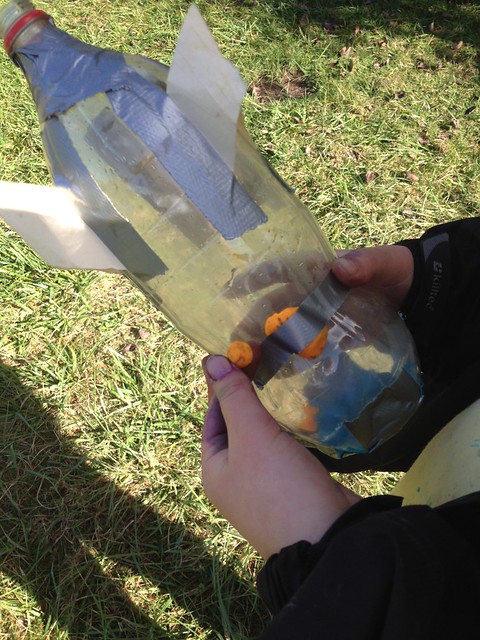
4.  At a UU Middle School CON this weekend my son got to build and launch pop bottle rockets.

Bottle Rocket Dude 2

5.  At the same CON, there was also tie dye, board games, archery, challenge course, capture the flag, worship, social learning, boating, and beach combing.  Lots of fun learning for him!

Boating at Camp

Monday, June 16, 2014

We Need Diverse Books

IMG_0585

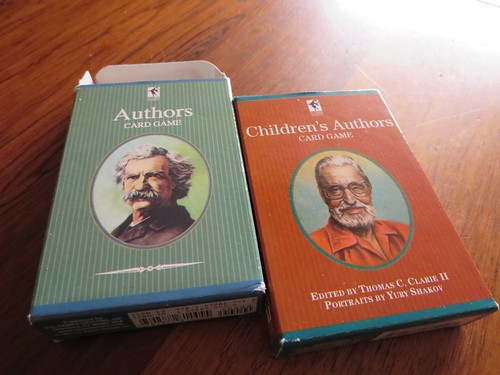
Did you ever play Authors?  This was one of my mom's favorite games when I was a kid, and I remembered it fondly.  When I recently ordered a set for my family to try out, however, I had one of those uncomfortable moments when you see a childhood thing and realize how biased it was.

The authors are all white, and there is only one woman author.  My kids noticed it at once, and I'm proud of them for that.  But darn - I really liked this game when I was a kid, and it actually greatly influenced my reading list.

And that means that I missed out on a lot of good books that would have broadened my horizons.  Reading is the closest I can come to understanding a world, a place, a time, or a life that I can't actually live.  A good book gives the reader a chance to step into other shoes in a way that nothing else does.

The We Need Diverse Books campaign has made waves recently, and it is bringing much needed attention to the issue.  Not only do we need diverse books because everyone should be able to see themselves represented somewhere in the library shelves or the bookstore, but we also all need to explore beyond our own lives and beyond people who look or live just like we do.

IMG_0547

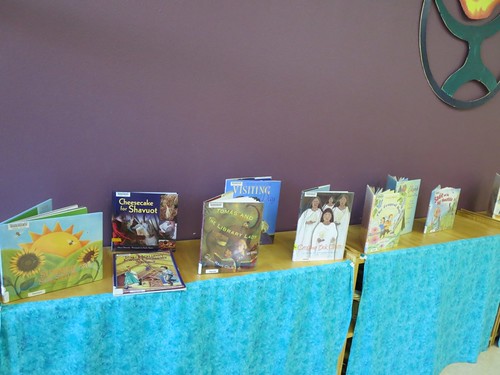
As a teacher, it is my job to surround the children I am educating (my own and the children at church) with books that celebrate diversity, promote acceptance and compassion, and open their minds to a larger vision of the possibilities of life.  All teachers should be curating the books they surround their students with, and there are helpful guides out there that can point us in the right direction.

(I also have a recommended reading list on my other blog right now, reflecting some of the good books I've found recently.)

Is it a lot of work to re-sort and re-evaluate your collection?  Yes.  But this is important, incredibly important, work that we all need to do.  And, it is also a joyful and fun task!  Goodness, there are some amazingly good books out there that are both representative of diversity and just lovely books in their own right.  If you love books, then realizing that you've only been getting just a slice of the them by reading your standards means that now you have a whole new world to explore.

But we only have them to explore if they get published, and so seek them out, buy them, and demand that publishers give us diverse books!


Friday, June 13, 2014

A Sense of Earned Righteousness

IMG_0544

 I'm still working my way through to read the entire Bible, in my Mother-Daughter Bible Study.  But, honestly, we got pretty bogged down by the point we reached Chronicles.  This is not just a book - this is a collection of books and some of it is pretty tough on the reader.

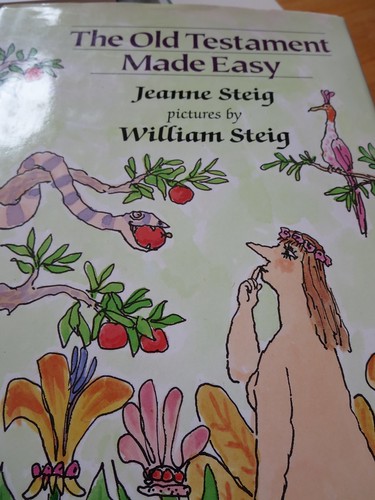
So I thought it was pretty funny when I was browsing in the used bookstore in town and found a very slim volume by Jeanne and William Steig called The Old Testament Made Easy.  It is far too slight a book to really be covering the whole Old Testament - and I was right, it jumps breazily through, with recommendations like "unless you like stats, just skip the begats".  It's cute and funny, all around.

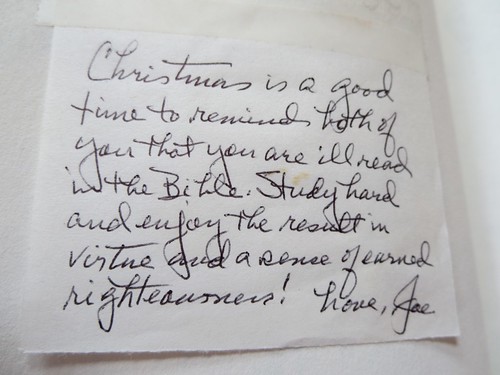
But it was even more fun to discover this note, taped, in the front of the book:

IMG_0546

It says "Christmas is a good time to remind both of you that you are ill read in the Bible.  Study hard and enjoy the result in virtue and a sense of earned righteousness!  Love, Joe."

The fact that the note was taped into the book and not directly written on the pages is also funny - was it taken from somewhere else and put in this book as a joke?  Or was the note ironic to begin with?

And a sense of earned righteousness - that is perfect!  That is just what I feel as I work my way through the difficult reading (Not skipping all the begats, either!).

Monday, July 29, 2013

Our Little Play

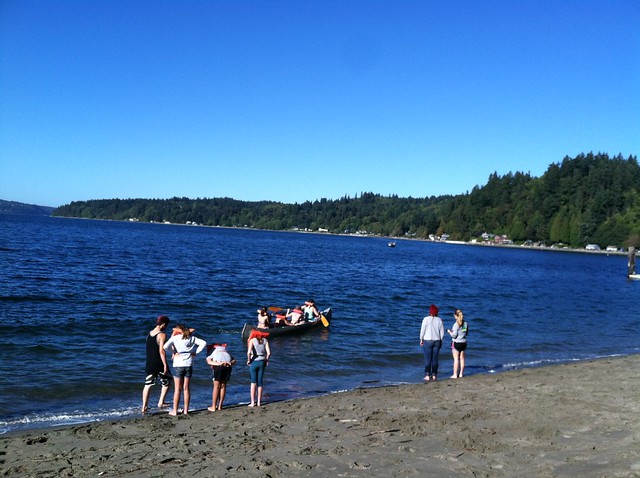
This last week the kids were at the church camp I taught all week.  And I'm absolutely counting those days as "school" days. :)


DSCF9537

The focus of the camp was "Peace Camp", and we used a non-violent communication curriculum (which I reviewed over on my other blog).

We also took the wonderful picture book The Three Little Wolves and the Big Bad Pig and turned it into a short play, which we performed during the Sunday worship service.  H. performed the role of the Little White Wolf, and C. was on set and prop design.

The performance yesterday went really well, the congregation loved it, and the kids were thrilled with the result of all their work.  It was great!

Thursday, July 18, 2013

Our week in camp

DSCF9503
(Terrariums with plastic animals)

This week I'm teaching a half-day camp at my church, for 4-7 year olds.  It has left me scrambling to keep up with domestic tasks such as cooking, cleaning, dishes, and laundry, and we've completely tabled our homeschooling for the week.

Meanwhile, my son is getting to be "staff" for this camp for the first time, and learning lessons from that, and my daughter is enjoying the camp activities and her friends.  I'm enjoying teaching, testing out some crafts that have been on my pinterest boards for a while, singing songs and playing silly camp games, and watching all the kids deepen their relationships to each other and to the church.  It's a good (if a bit tiring) week.


DSCF9464

This astronaut picture craft worked out well, but my daughter just couldn't follow directions. :)


Thursday, May 9, 2013

Weekly Round-Up

I find so many interesting articles and ideas when I'm reading online, and I enjoy other weekly link lists a great deal, so I want to try it on my own blog, and put a list of links up once a week.  A curated list of what I've found of interest this week:


What have you found thought-provoking this week?


Friday, February 8, 2013

God?

Last Sunday I led a workshop on "God?" for our 8th graders at church.  It's one of the peculiarities of working for a Unitarian Universalist congregation that most of our youth are atheists, and everyone is more comfortable talking about values than they are about God.

I invited our minister to join us for this workshop, and to expound on the question "why should we bother engaging with this word - "God" - at all?  He did a great job of talking the question out and encouraging the youth to explore their ideas of God more, but most of the youth seemed disinterested - for now.

I'm studying for a Liberal Theologies course right now, and found these words by Bill Schulz:

It is not particularly important to me anymore whether I or anyone else uses "God talk".  What is of supreme importance is that I live my life in a posture of gratitude - that I recognize my existence and, indeed, Being itself, as an unaccountable blessing, a gift of grace.  Sometimes, it is helpful to call the source or fact of that grace God and sometimes not.  But what is always helpful and absolutely necessary is to look kindly at the world, to be bold in pursuit of its repair, and to be comfortable in the embrace of its splendor.  I know no better term for what I seek than an encounter with the Holy.


Sunday, January 27, 2013

Seven Fun Things From Church Today

IMG_1791

1. A class of 3rd and 4th graders who build their vision of Solomon's Temple out of Duplos and then are so excited to show it to me and get me to take a picture of it.  Features to note: a water slide, a book open for the Priest to read from, and out of the camera shot, a rainbow standing over it all.

2.  Four year olds who sit on the rug in their classroom alone while I have to run out looking for a teacher after a volunteer doesn't show ... and when I get back without anyone and realize I have to cover this class myself (along with supervising the six other classes going on) the kids say "we were Statues!".  Darling little ones practically ran their own class today.

3.  Getting to pop in and watch 5th and 6th graders do a little skit based off "clues" for the Cain and Abel story, and see them create a whole new scenario.

4.  Holding hands with good people in the High School group gathering.

5.  Having great advisors come in and enrich the Middle School lesson so much.

6.  Getting to introduce a new little one to our Nursery.

7.  Arriving in time to find my daughter is the last one in her class of 1st and 2nd graders and is valiantly still trying to hold their model Ark of the Covenant up "because all my friends left me when they heard there were cookies!".

IMG_1793

Monday, January 21, 2013

Mother-Daughter Bible Study

DSCF8314

On Saturday my mom and my sister and I got together for our first Mother-Daughter Bible Study.  We discussed Genesis and Exodus, and traded little bits of research, understandings, questions, and impressions we had gained as we each read those books over the last month.

I've never read the Bible all the way through.  Most people I know have never read the Bible (perhaps at all).  My mother grew up Presbyterian and was a studious child and youth, so she actually has a background in Sunday School lessons and youth group Bible Study, but already she's noticing that they focused on "just the easy bits".

It's not a requirement of the Religious Educators Credentialing program, but as I was working on the Jewish-Christian Heritages section of my portfolio it occurred to me that I wish I had read the Bible.  I wish I had a better understanding of the primary text, and not just the interpretations that other (more conservative) religious people have put on it.  I wish there was a liberal-leaning Bible Study group out there.

I looked online at other area church websites and on Meetups, but all the Bible Study groups were clearly more conservative than I would be comfortable with.  I didn't want to start one at work, because then it would be "work", I'd have to convince others of the reason to do it, and I'd end up cast in the "expert/leader" role when I really want to be in the learner role right now.

During a phone call with my mom where I was complaining about the lack of liberal Bible Study resources, she said she'd love to do it with me, and the Mother-Daughter Bible Study was born.  My sister joined in, even though as a college student she doesn't really need any more studying to do - but we're a homeschooling family and this is the way we roll.

It's delightful to have a reason to get together once a month, a deadline that pushes us to keep up with our reading, and a discussion group that shares a similar way of looking at the subject matter, so I'm really happy to take on this project.  But this is going to take us a long time, if we only read two books of the Bible a month!  A long-term project, fitting for life-long learners.

Sunday, January 13, 2013

Doing Church


I get up very early on Sunday mornings to get to church in time to set it all up.  Part of what makes that actually pleasant is that I listen to eTown which airs from 7-8am on Sunday mornings here.  In a lot of ways, eTown feels like church to me.  There is good, soulful music that frequently has a social or uplifting message.  There is conversation with the artists, usually focused on what inspires them and what their mission is.  They also honor someone every week with the "e-chievement award" and discuss the justice or environmental work that person does.

This feels like church to me.  I'm uplifted and inspired, moved, challenged, comforted.  So should I just get up and listen to the radio in the morning and then go home?

Of course not (even setting aside that not showing up to work would be a bad idea).  It wouldn't be enough, because passively listening to the radio is not Doing Church.

Listening is part of Church.  But, in much the same way that going into nature alone is not Doing Church either, listening and not having to give something back to those around you is a completely different experience and only half (or less) of the equation that is Church.

When we Do Church, we take our place in a community.  It means interacting with other people.  It means being open to experiencing the jagged peaks and valleys of other peoples' lives, as they bring into the church their greatest Joys and Sorrows.  It means passing a tissue to a woman who is crying during the sermon, even though you have no idea why she has been moved to tears.  It means singing the Birthday Song for the 6 year old and the 98 year old at the same time.  It means signing up for cookie service and for the march on the capitol building.  It means that new ideas will challenge you.  Sometimes you will change your mind, sometimes you will just have to agree to disagree.  It means offering to hold the baby for a little bit, or holding the door open for the elder with a cane.  It means being challenged to explain what you think and believe and who you are to other people, who are also engaged in thinking about what they believe and who they are.

Listening to the radio on my way to church is important to me, but it cannot be the whole experience.  For me, as a Religious Educator, the radio show replaces what I missed in the worship service.  But all the rest of it ... all the unpredictable, messy, human parts of it, are the real heart and soul of Church for me.

Thursday, January 10, 2013

Here I sit

IMG_1676

Here is the compliment to my previous Here I Sit post (maybe I'll make a thing of doing these sorts of posts).  Here is my space in my office at church, a place where I sit only slightly less than I sit at my desk at home.  Here, you can see that I am eating my lunch at my desk.  I'm loading updates on my computer software, getting a quote out of Everyday Spiritual Practice, referencing my calendars and my Little Book of Things I Need to Do.  This space is frequently covered in craft supplies, binders of curriculum, attendance sheets, registration forms, and catalogs.  Here I like to sit and sort it all out, file it, keep the wheels rolling and the balls in the air.  This space is less for contemplation and more for the ministry of administration.  I sit here three afternoons a week, and then it is the dumping ground for all the things I don't have time to attend to on a Sunday.  On Tuesday I come in and shovel it all back off and file it, respond to it, get it back under control.

Here I sit.

Sunday, December 16, 2012

Holiday Weekends


The holidays are busy times for me at church, although it usually settles down by the second half of December and I get a little reflective time in the second half of the month.

This weekend was the biggie.  A holiday variety/talent show on Saturday, then church Sunday morning and taking the youth group to the zoo for their light display Sunday evening.

Everything involved my family as well, so they are just about as tired out as I am.  I'm looking forward to my day off tomorrow!

DSCF8184

DSCF8188

Thursday, November 1, 2012

The Day of the Dead

Today is Dia de los Muertos, or The Day of the Dead.  It is a primarily Mexican holiday, in which people remember their loved ones who have died by cleaning their graves, bringing food and drink and flowers, and having what seems like a party.

Our congregation has marked the Day of the Dead with an intergenerational worship service on the Sunday before for as long as I have been here.  Originally, a member who grew up in Mexico began the practice, but after a few years she passed the leadership of the service on to the worship arts committee, and I have been involved in this service ever since I became the Director of Religious Education here.

A few things really jumped out at me last Sunday as I sat in the service.

When people are called to come forward and place mementos on the altar, almost everyone does.  Everyone is touched by death.

The pain of loss may lessen with time, but it's still there.  Some people are in tears for a loss that happened many, many years ago.  A twin sibling that died in childhood.  A baby stillborn.  A child or young person.  A spouse tragically killed too young.  Or other losses that surprise me that they are still so raw: parent, grandparent, aunt.  We will always mourn.

I know that some people avoid this service every year.  Not that many people bring their children.  But for many, this service is important.  They come to cry.  They come to see their tears as part of a larger picture of the cycles of life and the larger life of the community.  To truly engage with life means to truly engage with death.

Over the years my "list" has grown.  At first I was just placing a memento for my lost pregnancy (and no matter what some may say, that was a "real baby", and I still mourn it), then for my grandfather.  This year it was my unnamed little peanut, my grandfather, and my other grandparents.  More life also means more loss.  

It is real, it is unavoidable, it is part of the experience of living.  

It is the ultimate Great Mystery, the Final Frontier.

We live In Between (as our reading on Sunday by Richard Gilbert says).

Or, in the words of Tim McGraw, "I hope you get the chance to live like you are dying".

Sunday, October 21, 2012

Living My Sermon

IMG_1167

IMG_1168 Our High School youth group decided they wanted to do something to support Yes on Referendum 74 (our state's ballot measure that asks us to vote to affirm the marriage equality law the legislature already passed).  Hypatia was hanging out with me last week as I led the youth group meeting, and she was inspired to join in.  This week she made this sign at home, and today she joined the group on the corner of a busy intersection as we all stood and waved our signs and our big Standing on the Side of Love banner.  (That's her dad behind her helping her keep her sign up in a strong wind).

I was struck by how her action today was just perfect with what my 1/2 sermon (I shared the morning with another speaker) this morning was all about:

Bringing Justice Home: Part 1


The story I told today was one that I saw done in a workshop at General Assembly this year.  General Assembly is the annual national gathering of Unitarian Universalist congregations, and this year it was a themed “Justice” GA in response to it’s location in Phoenix, Arizona. 


I think it is telling that in the story the first group to stand in solidarity were children.  This speaks truth to me, not because I think children are naturally always kind and just – in fact children and adolescents are sometimes incredibly cruel to each other.  No – it is not because they are better-natured than adults, but rather because they are not numbed to injustice yet. 

A couple years ago, my son hit that stage of reading where he was working out all the signs he saw as we drove around town.  As I was sitting at a red light, he was working out what the handmade cardboard sign being held by the person on the street corner said.  “Homeless – need help”, it said, and he read that out loud just as the light changed and I drove on about our business.  My daughter, the younger child, cried out “that person said they needed help – why aren’t you helping them!?”.

Indeed, why am I not helping them?  Because I don’t want to encourage street corner begging?  Because I am afraid that giving them money won’t actually help them?; because I am too busy, in too much of a hurry?  These are all possible reasons for any of us to pass by on any given day.  But the reason, the primary reason, I believe, is that we cease to notice the injustices and sad sights that we see too often.  We become numb to it all.

Our children and youth bring new eyes, and as such they can see more than we do.  They can also speak that truth which they see, much as the small child does in the story of The Emperor’s New Clothes when they ask “why is the Emperor naked?”.  Too often, the adults in the crowd are afraid to mention that the Emperor is, in fact, naked.

How do we get so numb, so blind, so afraid to act?  It seems that in fact this is not the natural state of the human brain, as recent studies have shown that when people look at images of others experiencing pain or violence, the viewers have the same parts of their brain activated as if they were looking at pictures of their own children.  In similar studies, when people acted to help another the same part of their brain showed activity as it would if they were experiencing personal pleasure.  These sort of studies have led some academics to propose that humans are naturally compassionate and cooperative, and that altruistic behavior has a biological foundation.

 And then other studies, such as that by Pearl and Samuel Oliner’s study of Germans who helped rescue Jews during the Nazi Holocaust, have found that memories of growing up in a family which prioritized compassionate and altruistic behavior had a strong correlation with future adult action.

With this in mind, I believe that each action I take in front my children – and every action that any one of us takes in front of a child – is important not just because of what that action can accomplish today, but because of what sort of future action will result from my modeling.  Realizing that it was not emotionally and developmentally appropriate for my children to pass by a person on the street asking for help, I helped them create care packages that we now keep in our car and can give to anyone we see on the street asking for help. 

As poet and activist Wendell Berry has written: “Protesters who hold out longer have perhaps understood that success is not the proper goal.  If protest depended on success, there would be little protest of any durability or significance.  History simply affords too little evidence that anyone’s individual protest is of any use.  Protest that endures, I think, is moved by a hope far more modest than that of public success: namely, the hope of preserving qualities in one’s own heart and spirit that would be destroyed by acquiescence.”

I feel that action is needed to preserve those qualities in my heart and spirit, and also in the heart and spirit of all who look to me as a model, those like my own children.  And when I think about the ripples of influence that all those hearts and souls living into their best selves may lead to, I have to say that it is impossible to judge the success of anyone’s individual single action.

Going back to psychological research we find the phenomenon of learned helplessness.  Learned helplessness is the phenomenon of an animal or human who has repeatedly had a negative experience internalizing the idea that they are helpless to change that experience, and consequently ceasing to even try to make a positive change.  If we repeatedly experience ourselves as helpless to effect change, we may internalize this sense of learned helplessness and just stop trying.  Learned helplessness is, of course, a self-fulfilling prophecy, since we will never effect change if we don’t even try.

I realized at one point with my children that I have learned helplessness.  We were listening to an NPR story about a controversial death penalty case, which sparked a family discussion of the death penalty.  My son was horrified that we would think it was right to ever kill anyone, and I sympathized with his point of view.  But my knee-jerk response, the one that ran through my mind was, “yeah, I used to care about that too, but it’s hopeless.  Nothing will ever change, so we should just change the channel.” 

Fortunately, I remembered how important it is to empower children, rather than to downplay their natural impulses toward compassion and justice-seeking.  It can be so hard to hold onto our impulse toward justice, and there will be enough discouraging experiences for the kids in their lives – one of those discouraging experiences does not need to be caused by me.  Responding to his interest in this issue, I helped him write a letter that we sent to several political leaders.  Did his action make a difference?  Perhaps not.  Did it make a difference to him?  Yes.   It was one of those actions that sustained the qualities of compassion and justice-seeking in his heart and soul.

It is a well-worn cliché to say that “the children are the future”, but as with many clichés there is a core of truth in the saying.  Whenever you engage in justice-work alongside a child, you are making a double investment with your time and energy.  You are making the world better today through your efforts, and you are helping to make the world better in the future through the life-long values you are helping to instill in that young person. 

In General Assembly in June, I attended a workshop called “Justice as a Family Value”.  There were many people in attendance who had impressive resumes of activisim and justice-work, but we spent most of our time talking about our childhoods.  What did we experience in childhood that inspired us to live the values of justice-seeking?  One woman remembered Socks.  She remembered that her mother would always buy extra socks, more than their family needed, and would hand those out to homeless people.  Was that personal sock project huge?  I doubt it.  However, it turned out to be huge in the life of this woman who would grow up to do many many more actions to make the world a better place.

My daughter asked me this summer what I hoped the future would be like.  I gave her a description of my best and most hopeful version of our possible future, and she smiled confidently in response.  “Ok”, she said.  “Let’s do that.”  That youthful voice of optimism inspires me.  Yes, indeed, let’s all do that.

Monday, September 17, 2012

Welcome Back to Church

IMG_1114

Many, many UU's take the summer sort of "off" from church, and so we drop down to just one All Ages Religious Education class in the summer.

Yesterday we went back to the full array of classes, and had a big crowd show up.  For the first day of class, we concentrated on playing icebreaker games to build community, and on writing a Covenant in each classroom for how the children or youth will be together this year.

It was pretty energizing to see all that activity in our classrooms again. I'm looking forward to a great year!

Monday, August 27, 2012

Picture Books for the 6th Principle


Our 6th of the 7 UU Principles is The goal of world community with peace, liberty, and justice for all;

Following our Rainbow scheme for the kids it is worded (Indigo Promise)  Insist on Peace and Justice for All 

The books we read for this Principle this summer:

Why War is Never a Good Idea by Alice Walker is an unflinching, but beautifully illustrated, reflection on all the consequences of war.

Can You Say Peace? shows children from around the world saying "peace" in different languages.

What Does Peace Feel Like? has quotes from children about what peace feels, smells, tastes, and sounds like.  It's quite delightful.

Peace Begins With You is my favorite, being a simple explanation of conflict, peace, and how we can work toward peace.

This list of books about peace and social justice looks promising also.

Sunday, August 19, 2012

Children's books for the 5th Principle


Our 5th Unitarian Universalist Principle is The right of conscience and the use of the democratic process within our congregations and in society at large;

For the kids we re-word that as Believe in Your Ideas and Act on Them, and Listen to the Ideas of Others or sometimes as Everyone Has a Voice

Books I love for this Principle:

The Day Gogo Went to Vote is about a South African grandmother finally getting the right to vote after the end of apartheid. 

Yertle the Turtle

Horace and Morris, but mostly Dolores

Heart on Fire: Susan B Anthony Votes for President

Henry Hikes to Fitchberg


Books about the political process here.

Related posts:
Books for the 4th Principle

Books for the 3rd Principle

Books for the 2nd Principle

Books for the 1st Principle

Sunday, August 12, 2012

Picture Books for the 4th Principle


The 4th of the Unitarian Universalist Principles is A Free and Responsible Search for Truth and Meaning, which we word for the children as Grow By Searching for Truth.  Books I have found that go with this Principle are:

The Three Questions by Jon Muth takes a Leo Tolstoy story and reworks it as a magical fable for children.

Another Jon Muth book is also good for this Principle: Zen Shorts

The Hermit and the Well is a story from Thich Nhat Hanh's childhood.

The Empty Pot and The Greatest Power, both by Demi, are stories of how children search for truth and are rewarded with positions of authority because of their search.

Related Posts:

Picture Books for the 1st Principle
Picture Books for the 2nd Principle
Picture Books for the 3rd Principle