Showing posts with label pedagogy. Show all posts

Monday, December 15, 2014

Bringing Unit Studies back into our homeschool

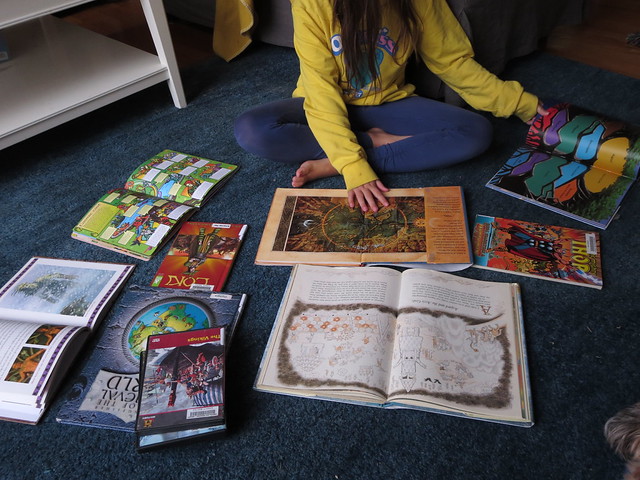
Norse myths unit study

I hit a wall a few months back, and was incredibly discouraged about my ability to work and homeschool my kids at the same time - it was all too much and no matter how hard I worked at it, I fell further and further behind schedule and felt like I was drowning. 

Some reflection led me to realize something that should have been obvious: I had gone on sabbatical from work this year and allowed the way we do school here to mushroom until it filled all that additional time and energy I had while not working.  Slow goal-creep had occurred until we were (rather ridiculously) trying to do two foreign languages per child (and they had selected different languages!), American History AND Ancient World History (once again different programs for each child), and on and on .... Basically each time I encountered something I thought we should be learning, I just added it right on top as if we could do it all at once.

No wonder I couldn't keep up with my own expectations. 

We simplified.  A lot.  I kept the core skills stuff in place: math, grammar, spelling, handwriting, reading, writing, typing.   Music lessons continue.  My daughter dropped her "extra" foreign language, while my son decided to continue trying to do Spanish with his sister and German on his own.  And then we just let go of all the literature, science, and history we had been studying. 

It's not that I don't think science and history are important.  I just couldn't maintain that we had to follow these timelines and programs, on top of everything else.  Instead we have turned to Unit Studies again.  And I'm turning the managing of the unit study over to the kids themselves.

Our interpretation of the unit study method:

  1. Ask the kid what they want to study.  Have them pick a topic for the next unit study.
  2. Acquire a rich variety of resources and supplies for them to use as they study this topic.
  3. Give them three weeks to study the topic, with a daily place holder of "Unit Study Time" on their assignments.
  4. On the last week of the month, there are no other assignments except for the essentials(practicing musical instruments for us), and all the time is spent on wrapping up the unit study and preparing for Presentations.
  5. Presentations must always consist of a written report And something else of their choice (a poster, a movie, a hands-on demonstration, etc).
  6. Get a real audience for the Presentation, even if it is only the Other Parent (the one that is less involved in the daily homeschooling) or a Grandparent.
Repeat, with a new randomly chosen topic the next month!

So far, this has been a Huge Improvement for us.  I have handed the responsibility for this part of their learning over to the children, to a fairly great extent.  They are studying things they want to study, so their motivation is their own and I don't have to supply it through my management.  It's more fun, and no doubt they will remember these topics and projects more because they had intrinsic motivation and applied meaning - all that good stuff we want to foster with our pedagogy. 

No doubt my children will have strange and unique educations as they wend their way through the paths of knowledge guided by pure whimsy and wonder.  But that will be just fine, I think.

(What have we studied so far?  Norse Mythology, "other alphabets" - which then settled into "Runes", Cooking, and Steampunk.  In January they have selected Marine Biology and Medieval Architecture.)

Saturday, November 22, 2014

Large Doses of the Outdoors

IMG_0671

This year we found a wonderful program for my son to do, attending the "Environmental Connections Outdoor School" which is a once a week full day of nature study, free play, and exploration outdoors.  They meet in a local park, and they do have a picnic shelter with a roof but otherwise they are really outdoors all day, all year.

Yesterday was a rainy and blustery day, which my daughter and I spent indoors (at church and at home) and still felt the need to go out for steaming hot bowls of pho for lunch.  As we looked out the window at the rain, we said "poor buddy, he's probably all wet and miserable".

When I picked him up, however, the sight that met me was not a bunch of bedraggled children huddled under a picnic shelter.  Instead, the children were playing in a shelter they had built in the woods, playing tug of war with an ivy vine they found that was apparently indestructible, and sliding through mud puddles and pits.  Yes, my son was all wet and dirty, but he was decidedly Not Miserable.  In fact, he said he had the best day ever and couldn't wait to do it again.  He had spent the rainy day carving sticks, building a fort, dissecting owl pellets, hearing local history stories (about the first peoples of this land and the settlers who came later), and generally having a grand time. 

We all belong outside, but children especially should be outdoors.  The connection with nature, the survival and resiliency skills learned, the healthy benefits of fresh air and plenty of physical activity - these are precious and valuable aspects of outdoor education. 

I'm so glad that 20 % of my son's schooling time is now spent in this way!

Monday, September 29, 2014

The Fun Five: Five Fun Extras in Our Homeschool Last Week

Education is not all just math pages and history books.  There is learning that takes place off the page, out in the world, and sometimes spontaneously.  Play and Imagination, Nature and Friends, and Fun are all part of everyone's education, and here is what that has looked like in our homeschool recently:

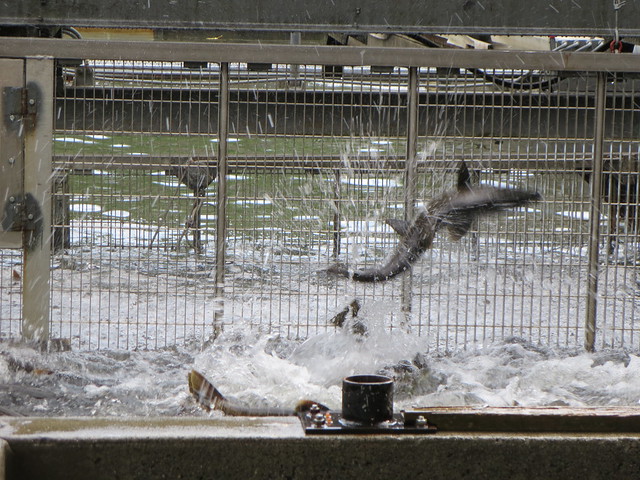
1.  We went to see the salmon run and harvesting at a local river

Salmon jumping

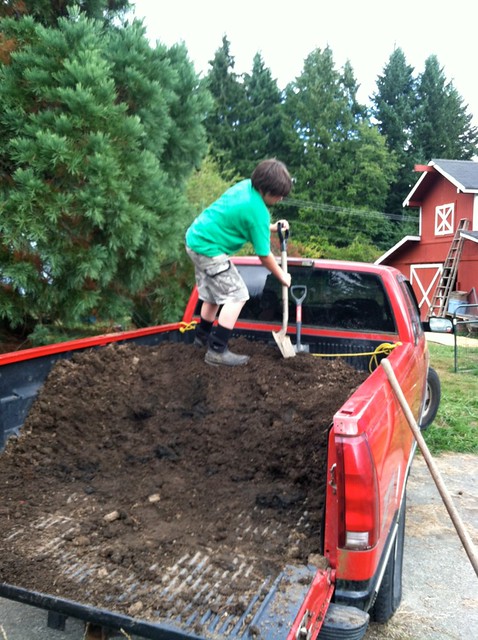
2.  Chores on our little hobby farm always provide opportunities for real world learning

IMG_3370

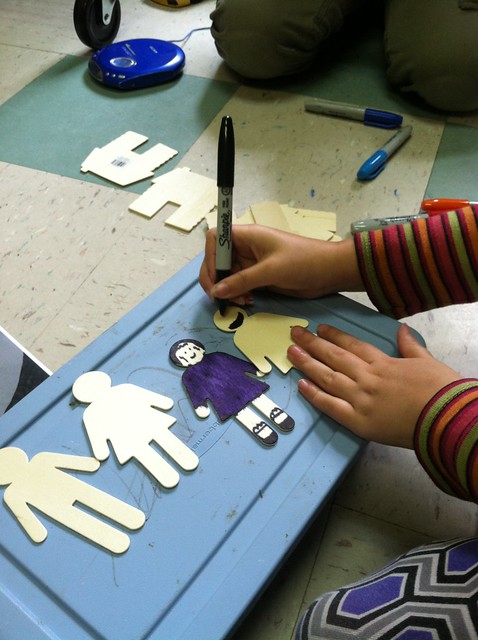
3.  The kids go to work with me at church, and sometimes they get to help with things like creating a Spirit Play story basket.

Making a Spirit Play Basket

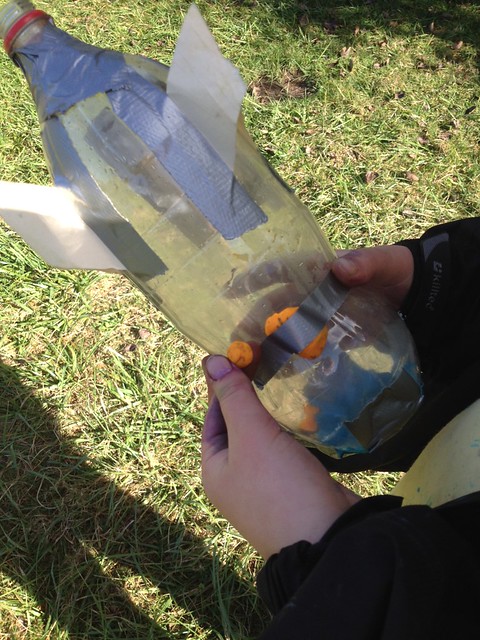
4.  At a UU Middle School CON this weekend my son got to build and launch pop bottle rockets.

Bottle Rocket Dude 2

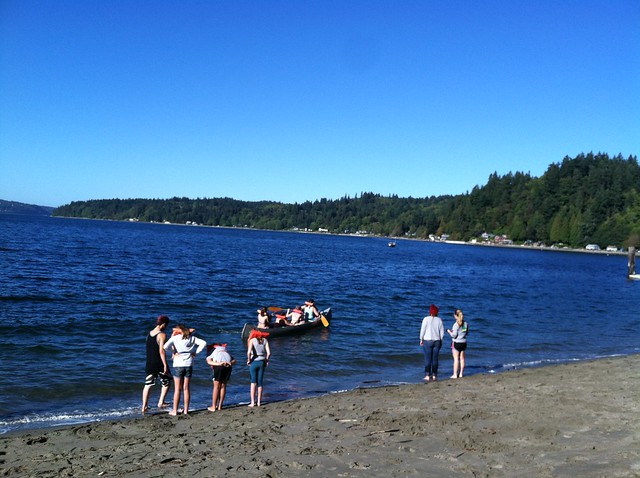
5.  At the same CON, there was also tie dye, board games, archery, challenge course, capture the flag, worship, social learning, boating, and beach combing.  Lots of fun learning for him!

Boating at Camp

Monday, June 23, 2014

What I'm Reading: Ungifted

IMG_3071

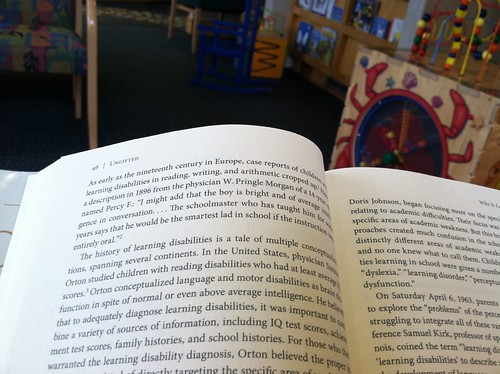
It's a big book with more than one subtitle: Ungifted: Intelligence Redefined: The Truth About Talent, Practice, Creativity, and the Many Paths to Greatness by Scott Barry Kaufman.

Kaufman tells a fascinating story about intelligence, weaving his own personal life story with both the history of the changing science and understanding of intelligence and the latest findings and speculations in the field.  Kaufman was labeled learning disabled as a child, and became fascinated with understanding intelligence in the abstract and his own in particular.

IQ, mindset, potential, talent, creativity, effort, and the g factor are all discussed and sometimes the book gets a bit dense.  I am a tad rusty on my understanding of statistics, and had to do a little refresher to figure out some of this.  But although the material has serious weight to it, it is also presented in a very interesting way and I found it fascinating.

The validity of testing and the labels "learning disabled" and "gifted" are also really challenged here.

The implications for education are that we should be addressing the whole child with work on cognitive strategies, maximizing each individual's strengths, and encouraging a growth mindset and lots of deliberate practice.  Intelligence is earned through effort, not fixed at birth.

Quotes:

Counterintuitively - and contrary to the practice in most schools - the most efficient and cost-effective route to obtaining the best academic outcomes for all students is not a narrow focus on content but a focus on the whole child, including their social, emotional, and physical development.

The deep implication here is that there should be no external pressure to realize a goal at a particular rate.  The comparison isn't with others; it's with your former and future selves.  If we rid ourselves of the notion that any of us ever reach a state labeled "failure", then there's no problem whatsoever in encouraging people to engage with a domain.  

This suggests we should encourage children to dream the impossible, to think beyond the standard expectations, to dare to be unrealistic.  Such encouragement promotes the importance of perseverance and questioning the established order.  What's more, this instills in all people a mindset of lifelong learning and growth.


Wednesday, August 21, 2013

Field Trips vs. Vacations

DSCF9739

(Chaco Canyon, New Mexico)

Field trips are a staple of our educational system.  The chance to go see something for real, rather than just read about it or see it on a screen, gives the topic relevance, scale, and an experiential quality that is necessary for most (if not all) learners.


DSCF9791

(Arches National Park, Utah)

A family vacation just makes it possible for us to do field trips that are farther away!  Trips and traveling are of great educational value, and the only downside is the difficulty I have in figuring out how many hours to log as "school" hours.

What I've settled on is only logging the time that I can imagine a school field trip group doing, and not counting time spent: eating at local restaurants, driving, swimming, or relaxing.  That is the vacation time!

Friday, July 12, 2013

Summer Schooling and the Novelty Factor

DSCF9429

It's July, and we are still doing school around here.  This is where it starts to seem really unfair to my kids, even though they do realize that all the kids in school didn't take the other breaks we took during the year.  None of that is emotionally satisfying, however, when other kids are talking about summer break and mine are still "in school".

So, it's good to make summer school a bit more fun and whimsical.  We've made time to go to all the wonderful (free!) summer community events: "The Reptile Man" brought reptiles for a show and tell in the park, the Master Gardeners did a free gardening class for kids, and the library had a comedian/storyteller in for a show.  But then how can I make it fun when we are just home doing math and the like?


DSCF9430

Yesterday I had school time be a sushi picnic in our backyard.  It was unexpected and fun for the kids (but it was fun because of novelty, so I won't be able to repeat this anytime soon.)

Is there a "pedagogy of picnics"?  I don't think so.  But I think there is a real value to adding fun and whimsy, to catching the attention again by doing something in a different way, and to varying the routine up every now and then.

DSCF9433

Saturday, June 1, 2013

What in the World Are We Studying Now?

DSCF9063

We don't follow a grand, preplanned scope and sequence here in our homeschool.  As I explained last August, child-led interests caused us to abandon the chronological approach to history, for instance.

And now that my daughter is also off on her own explorations that sometimes converge, sometimes run parallel, and sometimes conflict with those of her older brother, we end up with some very interesting combinations going at once around here.  I'll admit that it can overwhelm me a bit at times, to juggle all these subject areas, two very different learners, and all the resources to organize and schedules to keep straight.

Currently we are:


DSCF9124

1.  Feeding a new found interest in classical music in both kids.  In addition to their piano and violin lessons, they are enjoying learning more about the life of some famous composers and listening to classical music on Pandora.

2.  Exploring the Colonial history of North America.  After my daughter watched the Disney movie Pocahontas from the library and I was reminded how inaccurate that movie is, I started by checking out some good children's biographies of Pocahontas.  Interest in Jamestown led us to the PBS reality show Colonial House, which was a huge hit with the kids.  Now we are reading a stack of library books about Colonial times and contemplating some craft projects to go with it.

DSCF9050

3.  The boy has just finished reading a whole chapter book by himself - a new achievement for him!  The book is Alanna, the first in a series of four books I had just read out loud to both kids, so he decided to go back to the beginning of the story and read it again.  The sight of him curled up reading a book is a welcome one for me!

4.  He is also finishing his study of WWII.  We're wrapping it up with a few old classic John Wayne movies, and then we'll be done.  Since we broke with our old chronological approach to jump straight to WWI, we had to decide what to do next: keep going through the 20th century history or go back to something earlier?  He chose the latter option, and we're going back to Medieval history where we had left off before.

5.  Getting our second go-around with Ancient Greece.  My daughter was interested enough to sit in and listen when her older brother studied Ancient Greece years ago, and we did Greek Myths all together last year.  So now she is ready to study Ancient Greece in her own right, but he's interested enough to listen in (this is a great advantage of multi-grade settings, that children get multiple exposures and plenty of chances to review and even be tutors to younger children).  Because we did the myths so much already, we're reading children's versions of the Homeric epics now.

DSCF9065

6.  Earth Science for Hypatia using Real Science Odyssey, and Physics for Carbon using Exploration Education.  We've got crystals growing right now, and we've been messing about with a rock collection, identifying rocks.  Carbon has built an electrical circuit and is messing about a lot with his snap circuits (I can't praise snap circuits enough).

7.  Still practicing Spanish with Rosetta Stone and Hooked on Spanish.

8.  Choosing not to move on from the Alpha level of Math U See right away for the girl, but doing some Kumon addition and subtraction workbooks first.  Meanwhile, the boy is cruising again and moving quickly through the Gamma level.  Sometimes math comprehension comes quickly, sometimes it doesn't, and we try to follow the flow and stay with a level until it's truly been mastered.

9.  Doing Language Lessons with both kids, and then we've been doing Explode the Code (on paper, not the online version) with both as well, but I think it's no longer useful for my son.  He's finished Level 3, and now I'm wanting to do a different program with him - something like a word roots program.  If you have one to recommend, please tell me!

10.  With the boy we are using Writing Strands.  I have mixed feelings about the program, and would like to explore some other writing programs.  Once again, recommendations are most welcome!

11.  With the girl we are still focused on getting her reading.  We have a lot of beginning readers, and just read one a day.  They are of extremely variable quality, but have the virtue of being short even if they are awful.  I try to pay attention to her zone of proximal development and avoid frustrating her too much but still challenging her as we read together.

12.  And of course there is: nature study as it occurs naturally (pun intended), "Outdoor Hour", gardening, baking, animal husbandry, chores, Minecraft, imaginative play, movie-making, "Project Time" and "Making Time", yoga, and field trips.


What we're not doing: we've fallen off with our art program.  Mostly we ran out of supplies, and I haven't had the money to spend to go the art supply store.


Thursday, May 23, 2013

The Value of Game Play

DSCF8991

As we are settling into a routine with our two days a week of "Block Schedule", we are scheduling "Game Time" onto those days.  Sometimes it's a 30 minute block, sometimes it's an hour.  At first, because this was for school, I limited the game selection to our collection of explicitly "educational" games.  Gradually, however, the time has come to mean that the kids can pick any of our games or puzzles.  We are still not allowing computer or video games during this time, however, because those happen so much without any time dedicated to them.  This is special time for board games and puzzles.

Is this really "school"?  By my definition, yes.  There are so many things we learn from games, and not just those that have been elevated to the status of an intellectual pursuit, such as chess.  It's not just the cognitive or academic lessons, either, but also the social:


  • communication skills
  • strategy
  • perseverance
  • winning/losing gracefully and resiliency 
  • hand-eye coordination
  • creativity
  • fairness


DSCF9002

These are the sorts of things I want us to be doing, and the best way I have found to make sure they happen is by putting a special time on our schedule.  Something we'll keep doing for sure!

Monday, May 13, 2013

Don't Be Afraid to Innovate

DSCF8997

We worry so much about finding the Perfect Solution, as if there is One Right Way to educate our children (or do anything else).  But this book I read last week and the this video I watched this morning pair together to remind me that innovation involves experimentation and FAILURE.  Fail early and often, but just keep trying new things!  We can't be afraid to fail, or there are so many things we will simply never try in the first place.


Quotes from A Simpler Way by Margaret J. Wheatley:

There is no such thing as survival of the fittest, only survival of the fit.  This means there is no one answer that is right, but many that might work.  Life explores all sorts of combinations, content to find anything that works.

We could give more support to our own experimentation if we focused on discovering pretty good solutions that worked for now.  With more to choose from, with more bidding for support as the ultimate right answer, we might feel less attached to them.  If these solutions did not require such enormous investments of resources, ego, and certainties, we could abandon them sooner if they stopped working.

So try something new.  And then stop it if it doesn't work.  If it does, great, but stay open to tweaking it again in the future.  This was the educational philosophy I was raised with: nothing works for every child, and nothing works forever.  So follow the lead of the child right in front of you, and do what is right for them, right now.  Be ready to change when that stops working.

Thursday, May 9, 2013

Weekly Round-Up

I find so many interesting articles and ideas when I'm reading online, and I enjoy other weekly link lists a great deal, so I want to try it on my own blog, and put a list of links up once a week.  A curated list of what I've found of interest this week:


What have you found thought-provoking this week?


Thursday, May 2, 2013

Weekly Book Post (Alone Together, Present Shock, Little Bookstore, Sticks and Stones, and Mind in the Making)

DSCF8662

I've read a bunch of good books this week.

Alone Together: Why We Expect More From Technology and Less From Each Other by Sherry Turkle  is a fascinating look at how humans are psychologically affected by technology.  The first half of the book (less interesting to me) was about robots and all the little fake pets and so forth that we use as well as the possible future of robots standing in for human relationships.  The second half of the book looks at The Network of internet and smart phones and how we are both more and less connected to others through the network.

This paired really well with another book that I read:

Present Shock: When Everything Happens Now by David Rushkoff is another look at how technology has changed us.  Rushkoff focused on how we perceive time, rather than on relationships, and has some fascinating bits about our biological clocks and how we perceive time.  However, Rushkoff doesn't give a lot of detail or refer to research, and that was a bit off-putting to me.  I like my research. :)

What came through to me from these two books is this one simple truth: we are biological beings.  We have tools and technology, and using those does change how we live our lives.  But the mistake we make is when we forget that they are tools, and when we try to change ourselves to match the tool rather than the tool to match us.


DSCF8961

The Little Bookstore of Big Stone Gap by Wendy Welch is a memoir of people choosing a different life and following their dream, which was in this case to start a little used bookstore in a small town.  Welch's writing is fun and funny, and I found myself wishing I could go visit their little bookstore.  It also made me feel pretty bad that I don't shop at small local stores in my town more often!  Support your local businesses!  (I have made a trip to our local bookstore this week, but my husband says I can't start buying all these books - I am a library user and I need to stay one!).

Mind in the Making: The Seven Essential Life Skills Every Child Needs by Ellen Galinsky is full of all the research detail that I like when I read.  Gallinsky has culled from many studies about how the brain develops in early childhood and about what skills are correlated with success in academics and life in general, and she has also interviewed real parents and examined successful programs.  The seven skills she says are the most important for your child to have are: focus and self-control, perspective taking, communication, making connections, critical thinking, taking on challenges, and self-directed engaged learning.  She gives suggestions for parents in how to strengthen all the areas.  I loved that almost every section suggested that the best thing a parent can do is model these skills and behaviors in their own life!

The last book I read this week is Sticks and Stones.  I wrote a blog post about it on my other blog, The Childrens Chalice.

Sunday, April 14, 2013

Unstructured Music Time

DSCF8890

We are trying something new, which we are calling our "Block Schedule Days".  On these two days out of the week, I set a schedule for our day, but only for categories of activity.  What exactly the kids do with that activity type during that time is up to them.  One category I wasn't exactly sure how they would handle was Music, so I lumped it together as one half-hour of "Art and Music".

See, normally I have to stand there and help them practice.  I've been doing a lot of coaxing to get Hypatia to do her violin, and there have even been tears some days.  And I was afraid they just wouldn't do their music at all given the option not to.

Instead, with their music time they each played, happily, for the other.  Hypatia tried to teach Carbon how to play Twinkle Twinkle Little Star, which is her never-ending violin piece (Suzuki!) so they could do a duet.  They got bogged down by the fact that she hasn't learned to read music and is instead memorizing finger positions and singing her pieces to herself to learn them, and Carbon's piano book still gives him finger numbers so he also is pretty weak on reading notes.  But they struggled through it, playing by ear to figure out what notes on the piano went with the notes she was playing on the violin.

Then they switched it up and Carbon taught Hypatia how to play one of his piano pieces, and they did piano together for awhile.

Then they started doing rhythm games together.

It was amazing.  This is the kind of learning and exploring that has time to flourish when they have more time and freedom.

Tuesday, March 19, 2013

Geology is all about edible projects

DSCF8616

I have looked at many, many different science curricula over the years.  Physics is all about models and rolling things into other things.  Chemistry is fizzy concoctions.  Biology is a blend, but you know you'll be messing about with eggs and plants.

Geology?  It seems to just beg for edible modeling.  We won't complain - I like a project that you get to eat afterward.


DSCF8617

Layers of the earth pizza.


DSCF8619

"Earth Balls" made from peanut butter and chocolate and coconut.


DSCF8620

She's not objecting to this line of study!

Wednesday, March 6, 2013

New possibilities in education

My favorite quote from this TED talk: "if a teacher can be replaced by a computer, they should be".  Of course, as a teacher (or parent) we know we are so much more than a computer - no computer could ever replace a good teacher.  But a not-so-good teacher?  Well, then replace away, apparently.  This really is food for thought:


Monday, February 4, 2013

"Just Messing About"

DSCF8398

One of the effects of the Edison study I had my son do recently has been an increased interest in trying things out and creating his own experiments and inventions.  Edison is a great example, and Carbon finds the accounts of Edison's many, many failures and persistent efforts very encouraging.

So he is inspired.  He is encouraged.  And he's trying all sorts of ideas - none of which have worked.  That cup experiment pictured above?  He was hoping if he heated the tube it would suck water from one tube into another.  I could see how he had the idea from the steam engine he built with his dad, but this didn't quite work.  Pictured below he was trying to make a baking soda and vinegar time release reaction by balancing the baking soda on a piece of plastic above the vinegar.  That also didn't end up working.  But, with the example of Edison fresh in his mind, he's not discouraged.

DSCF8405

So now I have to give him the space to do this sort of thing.  I have to give him time, supplies, permission to use a flame in his experiment.  When there is a list of school assignments still undone for that day, and he's out in the yard "just messing about" with vinegar, I have to remind myself that he's doing real learning out there.

If he doesn't get all his assignments done today because he spent hours on this sort of thing, we had our priorities in the right place.

Monday, December 3, 2012

Learning All the Time - and While on Vacation

DSCF8061

The kids get back from vacation tonight, and tomorrow we start "school" back up again.  But what did they learn while on that vacation?

DSCF8072


DSCF8062

We took a boat tour back into the mangroves, and saw all sorts of lovely birds (and crabs and iguana) up close.  Nature Study, for sure.

DSCF8042

We also visited the Aquarium in Mazatlan, which features a display on maritime science and history and the local fishing practices.  Clearly educational.

DSCF7985

The kids did a lot of boogie boarding, with their dad, aunt, and Papi.  Physical Education!

DSCF7905

And then there is Geography (field trip to another country, discussion of timezones, looking at maps, etc.) and Foreign Language (even if they were really shy about trying to speak Spanish).  They probably learned more from their "vacation" than they could have possibly learned in the same number of days sitting in school.


IMG_1507

Saturday, March 31, 2012

Play Time is still Learning Time

DSCF6129

Play = Learning is a formula that most people I know are comfortable with for early childhood. Little ones, preschoolers, maybe Kindergarten ... these little kids should be playing and learning that way.

But actually, play equals learning for us all, even adults. Play relaxes us, builds relationships, improves our emotional IQ, and can give us a challenge to overcome and learn from.

I'm not very good at playing anymore. I don't know if I was better as a child, but by this point in my life I'm always too busy just being busy to sit down and immerse myself in a game without hopping up to do other things or trying to multi-task it. I wish I was better at playing, and I try.

As I was gardening last weekend, my son said "why don't you ever have fun?"

"I do!" I replied. "I'm having fun right now, gardening."

"No - why don't you have fun with me? Why don't you play catch or something?"

So I did. I left aside my garden work, and we got out the mitts and the ball and tossed it back and forth for awhile, laughing and talking. I played with him.

My daughter has been very happy with the way I cleaned up our games and puzzles shelf, and she's pulled out many games to play. "Come play with me". I try, and we've been playing a lot of Zeus on the Loose. I played with her.

I've decided the kids need a bit of American History, and to start I'm just reading Meet Felicity to them. Pause, Mom! We have to go get all the American Girl Doll stuff down from Hypatia's room and sit on the floor playing with the dolls while you read. Of course you do! Play and Learn. They played.

Carbon has been obsessed with dinosaurs again. Every documentary, every library book, everything he can get his hands on just gets consumed rapidly. After an afternoon of watching a whole lot of documentaries on the television, I suggested it would be healthy to go outside and play for awhile. He didn't want to, but then a light got in his eyes - "Can I have a shovel and dig for dinosaur bones?". Sure, go dig for dino bones. He played.

We are Middle Path homeschoolers, meaning that I want some structure, but not too much. As I personally lean more toward structure, it's always helpful to me to hold up and celebrate the value of their play and their unstructured time. Play equals learning. Play equals emotional processing. Play equals bonding and relationship building.

Go Play.