Showing posts with label learning theory. Show all posts

Monday, September 29, 2014

The Fun Five: Five Fun Extras in Our Homeschool Last Week

Education is not all just math pages and history books.  There is learning that takes place off the page, out in the world, and sometimes spontaneously.  Play and Imagination, Nature and Friends, and Fun are all part of everyone's education, and here is what that has looked like in our homeschool recently:

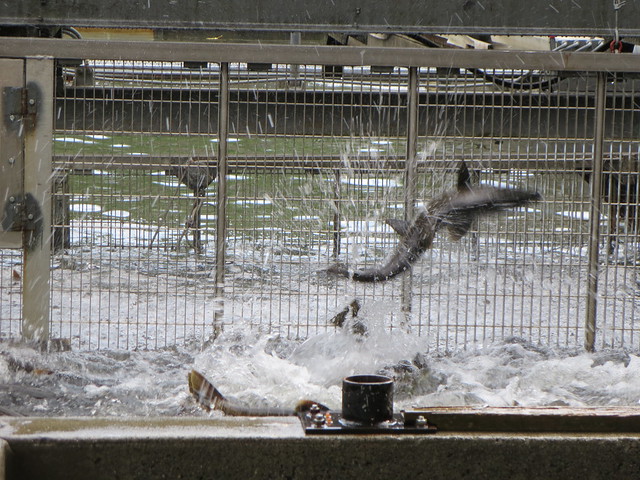
1.  We went to see the salmon run and harvesting at a local river

Salmon jumping

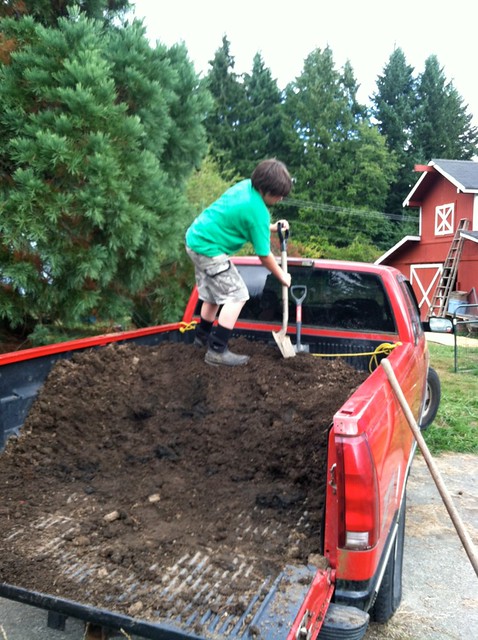
2.  Chores on our little hobby farm always provide opportunities for real world learning

IMG_3370

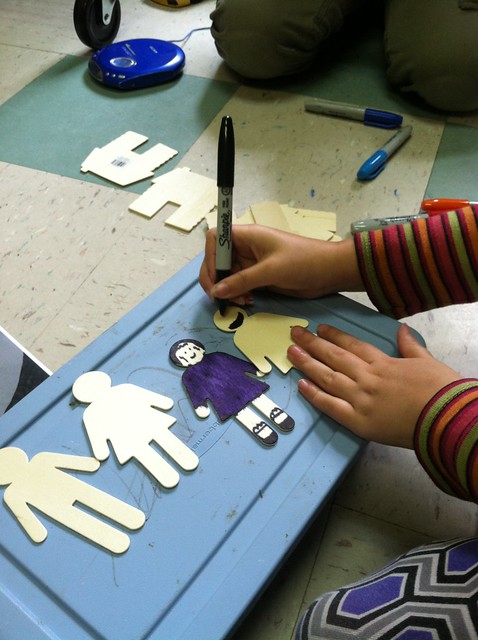
3.  The kids go to work with me at church, and sometimes they get to help with things like creating a Spirit Play story basket.

Making a Spirit Play Basket

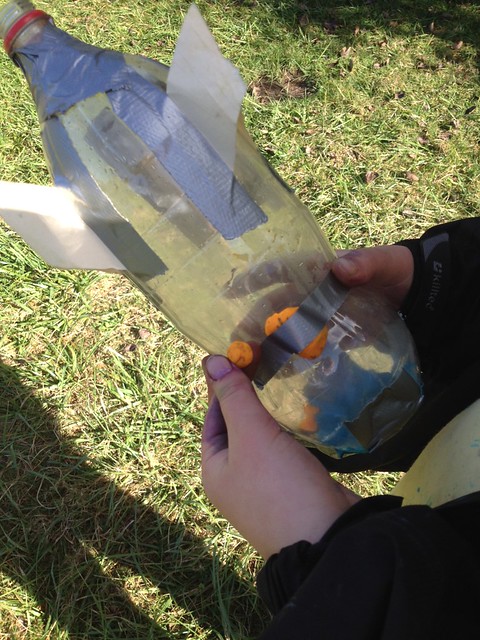
4.  At a UU Middle School CON this weekend my son got to build and launch pop bottle rockets.

Bottle Rocket Dude 2

5.  At the same CON, there was also tie dye, board games, archery, challenge course, capture the flag, worship, social learning, boating, and beach combing.  Lots of fun learning for him!

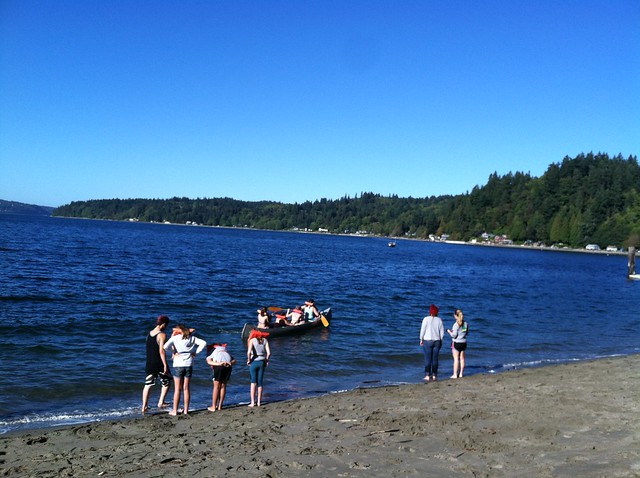
Boating at Camp

Monday, June 23, 2014

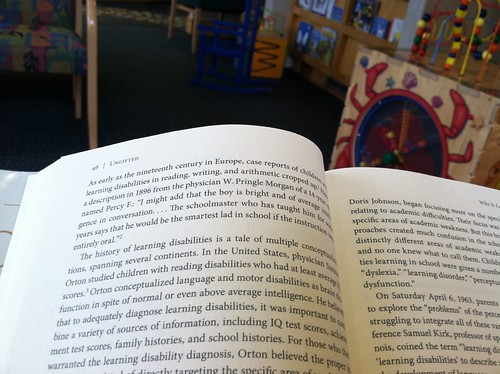
What I'm Reading: Ungifted

IMG_3071

It's a big book with more than one subtitle: Ungifted: Intelligence Redefined: The Truth About Talent, Practice, Creativity, and the Many Paths to Greatness by Scott Barry Kaufman.

Kaufman tells a fascinating story about intelligence, weaving his own personal life story with both the history of the changing science and understanding of intelligence and the latest findings and speculations in the field.  Kaufman was labeled learning disabled as a child, and became fascinated with understanding intelligence in the abstract and his own in particular.

IQ, mindset, potential, talent, creativity, effort, and the g factor are all discussed and sometimes the book gets a bit dense.  I am a tad rusty on my understanding of statistics, and had to do a little refresher to figure out some of this.  But although the material has serious weight to it, it is also presented in a very interesting way and I found it fascinating.

The validity of testing and the labels "learning disabled" and "gifted" are also really challenged here.

The implications for education are that we should be addressing the whole child with work on cognitive strategies, maximizing each individual's strengths, and encouraging a growth mindset and lots of deliberate practice.  Intelligence is earned through effort, not fixed at birth.

Quotes:

Counterintuitively - and contrary to the practice in most schools - the most efficient and cost-effective route to obtaining the best academic outcomes for all students is not a narrow focus on content but a focus on the whole child, including their social, emotional, and physical development.

The deep implication here is that there should be no external pressure to realize a goal at a particular rate.  The comparison isn't with others; it's with your former and future selves.  If we rid ourselves of the notion that any of us ever reach a state labeled "failure", then there's no problem whatsoever in encouraging people to engage with a domain.  

This suggests we should encourage children to dream the impossible, to think beyond the standard expectations, to dare to be unrealistic.  Such encouragement promotes the importance of perseverance and questioning the established order.  What's more, this instills in all people a mindset of lifelong learning and growth.


Friday, July 12, 2013

Summer Schooling and the Novelty Factor

DSCF9429

It's July, and we are still doing school around here.  This is where it starts to seem really unfair to my kids, even though they do realize that all the kids in school didn't take the other breaks we took during the year.  None of that is emotionally satisfying, however, when other kids are talking about summer break and mine are still "in school".

So, it's good to make summer school a bit more fun and whimsical.  We've made time to go to all the wonderful (free!) summer community events: "The Reptile Man" brought reptiles for a show and tell in the park, the Master Gardeners did a free gardening class for kids, and the library had a comedian/storyteller in for a show.  But then how can I make it fun when we are just home doing math and the like?


DSCF9430

Yesterday I had school time be a sushi picnic in our backyard.  It was unexpected and fun for the kids (but it was fun because of novelty, so I won't be able to repeat this anytime soon.)

Is there a "pedagogy of picnics"?  I don't think so.  But I think there is a real value to adding fun and whimsy, to catching the attention again by doing something in a different way, and to varying the routine up every now and then.

DSCF9433

Friday, May 31, 2013

Weekly Book Post (The Shallows, How Children Succeed)

DSCF9062

This week I've read two books about our malleable brains.

The Shallows: What the Internet is Doing to Our Brains by Nicholas Carr came out a couple years ago, so I'm behind the curve on talking about it, but I enjoyed this story of how the intellectual technologies we use change the way our brains are 'wired'.  Part defense of old-fashioned book reading, part natural history of the human brain, and part warning and social analysis of our new digital selves, this is a well-written and engaging book.  My take-away was the notion that our brains are always malleable, and that we expose ourselves to and habitually do will have neurological consequences for us.  So while I'm not ready to ditch the internet altogether, I am noticing how and when I use it, and I'm trying to stop mindlessly surfing just because I'm bored, and stop multitasking such as surfing the internet while also watching a TV show.

How Children Succeed: Grit, Curiosity, and the Hidden Power of Character by Paul Tough is a more recent book.  The author sets out to look at what makes children succeed (success seems to mean graduating from college and earning more money as an adult, with some other markers being health and avoiding jail and early pregnancy) and how we can influence this success.  Character traits, rather than cognitive scores, are identified as the largest influence on success, and those character traits are revealed to be both malleable and teachable.  Tough tells the story of the KIPP programs, a successful chess program in a low-income public school, and the efforts in an exclusive and expensive private school to address character issues in kids who never get to experience failure.  He also tells us about the latest research in Adverse Childhood Experiences, stress-management, and long-term health and mental consequences.  It's a well-told story, and one I think parents and educators should read.

The pairing of these two books, along with The Power of Habit, which I read a month ago, has me cogitating about our malleable, changeable brains and the notion that in many ways we become what we habitually do and are habitually exposed to.

Thursday, May 23, 2013

The Value of Game Play

DSCF8991

As we are settling into a routine with our two days a week of "Block Schedule", we are scheduling "Game Time" onto those days.  Sometimes it's a 30 minute block, sometimes it's an hour.  At first, because this was for school, I limited the game selection to our collection of explicitly "educational" games.  Gradually, however, the time has come to mean that the kids can pick any of our games or puzzles.  We are still not allowing computer or video games during this time, however, because those happen so much without any time dedicated to them.  This is special time for board games and puzzles.

Is this really "school"?  By my definition, yes.  There are so many things we learn from games, and not just those that have been elevated to the status of an intellectual pursuit, such as chess.  It's not just the cognitive or academic lessons, either, but also the social:


  • communication skills
  • strategy
  • perseverance
  • winning/losing gracefully and resiliency 
  • hand-eye coordination
  • creativity
  • fairness


DSCF9002

These are the sorts of things I want us to be doing, and the best way I have found to make sure they happen is by putting a special time on our schedule.  Something we'll keep doing for sure!

Monday, May 13, 2013

Don't Be Afraid to Innovate

DSCF8997

We worry so much about finding the Perfect Solution, as if there is One Right Way to educate our children (or do anything else).  But this book I read last week and the this video I watched this morning pair together to remind me that innovation involves experimentation and FAILURE.  Fail early and often, but just keep trying new things!  We can't be afraid to fail, or there are so many things we will simply never try in the first place.


Quotes from A Simpler Way by Margaret J. Wheatley:

There is no such thing as survival of the fittest, only survival of the fit.  This means there is no one answer that is right, but many that might work.  Life explores all sorts of combinations, content to find anything that works.

We could give more support to our own experimentation if we focused on discovering pretty good solutions that worked for now.  With more to choose from, with more bidding for support as the ultimate right answer, we might feel less attached to them.  If these solutions did not require such enormous investments of resources, ego, and certainties, we could abandon them sooner if they stopped working.

So try something new.  And then stop it if it doesn't work.  If it does, great, but stay open to tweaking it again in the future.  This was the educational philosophy I was raised with: nothing works for every child, and nothing works forever.  So follow the lead of the child right in front of you, and do what is right for them, right now.  Be ready to change when that stops working.

Thursday, May 9, 2013

Weekly Round-Up

I find so many interesting articles and ideas when I'm reading online, and I enjoy other weekly link lists a great deal, so I want to try it on my own blog, and put a list of links up once a week.  A curated list of what I've found of interest this week:


What have you found thought-provoking this week?


Sunday, April 14, 2013

Unstructured Music Time

DSCF8890

We are trying something new, which we are calling our "Block Schedule Days".  On these two days out of the week, I set a schedule for our day, but only for categories of activity.  What exactly the kids do with that activity type during that time is up to them.  One category I wasn't exactly sure how they would handle was Music, so I lumped it together as one half-hour of "Art and Music".

See, normally I have to stand there and help them practice.  I've been doing a lot of coaxing to get Hypatia to do her violin, and there have even been tears some days.  And I was afraid they just wouldn't do their music at all given the option not to.

Instead, with their music time they each played, happily, for the other.  Hypatia tried to teach Carbon how to play Twinkle Twinkle Little Star, which is her never-ending violin piece (Suzuki!) so they could do a duet.  They got bogged down by the fact that she hasn't learned to read music and is instead memorizing finger positions and singing her pieces to herself to learn them, and Carbon's piano book still gives him finger numbers so he also is pretty weak on reading notes.  But they struggled through it, playing by ear to figure out what notes on the piano went with the notes she was playing on the violin.

Then they switched it up and Carbon taught Hypatia how to play one of his piano pieces, and they did piano together for awhile.

Then they started doing rhythm games together.

It was amazing.  This is the kind of learning and exploring that has time to flourish when they have more time and freedom.

Wednesday, March 6, 2013

New possibilities in education

My favorite quote from this TED talk: "if a teacher can be replaced by a computer, they should be".  Of course, as a teacher (or parent) we know we are so much more than a computer - no computer could ever replace a good teacher.  But a not-so-good teacher?  Well, then replace away, apparently.  This really is food for thought:


Monday, March 4, 2013

Getting through to the Fun

DSCF8560

There is a delicate balance at times for parents, between on the one hand "making" your child do something they really don't enjoy and on the other hand leaving them to do only what they are passionate about and enjoy immediately.

I am a middle-path kind of thinker on most every issue, and this is no exception.  I'm not going to follow the path of the Tiger Mother, but I also won't leave the kids to follow only their own interests.  My experience is that we don't always know what we'll enjoy.  Our foray into basketball this season is an example.

Carbon had chosen to do gymnastics in the fall, but after a few months he was frustrated and unhappy with it.  So we had a talk, and I said he could quit gymnastics but that he should pick a winter sport to take it's place in our physical education line-up.  He chose to try basketball.

The first few practices were hard - he wasn't used to running that much, he really didn't have many skills with a basketball, and he didn't know the rules of the game.  He spent the hour looking unhappy and red in the face and glaring at me imploringly.  He said he hated it after his first practice, and strongly resisted going back to the second practice.  I might have caved to the pressure of that, but both his dad and I wanted him to give it a good try - more than just one or two practices.  So we made him go back.

He loved the excitement of the first game, and as his skills and stamina improved he started to really enjoy the sport.  By the end of six weeks, he's saying that he "loves basketball" and making plans to sign up for it again in the fall.  If we had quit after that first practice, he would have been left hating basketball, and never worked through the hard parts to find the fun parts.

There are many things in life where we have to develop a few basic skills before we can really start having fun with it.  I see part of my role as a parent to be to help the kids through the tough parts, when their own motivation may wain, so they can experience the fun accomplishments that come after.