Showing posts with label book reviews. Show all posts

Monday, November 24, 2014

The Faith of a Naturalist: a Book Post

Darwin Book

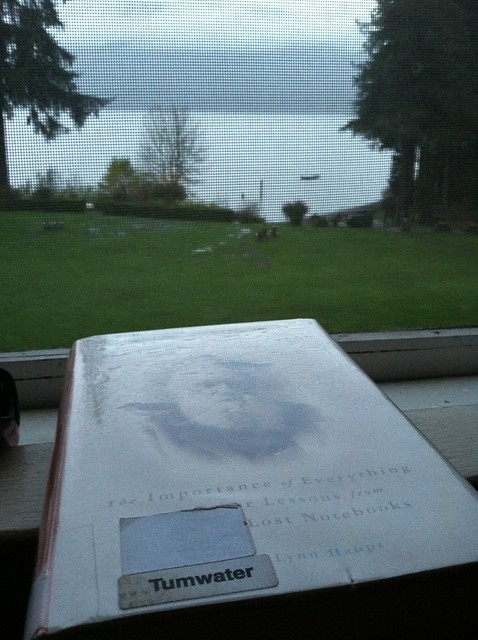
Today is the anniversary of the publication of The Origin of the Species, by Charles Darwin.  As I regularly make it a practice to find good resources for my congregation and put them into calendars that mark dates like these, last month I checked out a bunch of Darwin books from the library.  Many I was already familiar with (One Beetle Too Many and The Humblebee Hunter are my favorite picture books, and I really like the YA novel Charles and Emma: The Darwins' Leap of Faith), but I also received a stack I had not read before and I had to choose just one as I didn't have time for them all.  My choice was a fortuitous one, and I am happy to say that Pilgrim on the Great Bird Continent: The Importance of Everything and Other Lessons from Darwin's Lost Notebooks by Lyanda Lynn Haupt is a most fascinating book.

Unlike other books about Darwin that I have read, this book focuses on the inner journey and his growth as a naturalist through the daily writings he kept on his trip aboard the Beagle.  Haupt is herself a student of ornithology, so she admits to focusing on his work with birds mainly because that was the part that interested her the most, but also because she thinks birds are one of the more accessible areas of nature study for the general public.  As I also like to casually watch birds, I found myself agreeing with her.

While there is a great deal of interesting science and history here, in the end it wasn't the science or the history of the book that was the real take-away for me.  Haupt describes what she calls "the faith of a naturalist" and uses examples from Darwin and from her own life and studies as well as a few interviews she conducts that were in some way related to her topic.  She weaves between the historical and the modern, the scientific and the philosophical, and it was a lovely and thought-provoking progression.

A few quotes:

In our own lives as homespun naturalists, the moments we do manage to spend becoming educated by our native places can wend their way into our daily lives, making it more and more difficult to see ourselves as individuals, self-sufficient and cordoned off somehow from our humus-y ground.  We begin to see, rather, our lives as embodied, unseparate, inseparable, rushing forward with the whole of wild life.
****************
Yet it is here, in the spaces between what can be seen and what can be spoken, that the naturalist's faith often lies.  This is why it is called faith.  Intimacy, residence, patience, a sense of dwelling alongside wild nature, earthen insight, gratitude, affection, kindness, a kind of grace, a kind of joy - all of these unutterable things find a place in the naturalist's task.
Monday, November 10, 2014

More Books (my new hobby seems to be posing books where I was sitting when I read them)

2014-11-08 14.04.31
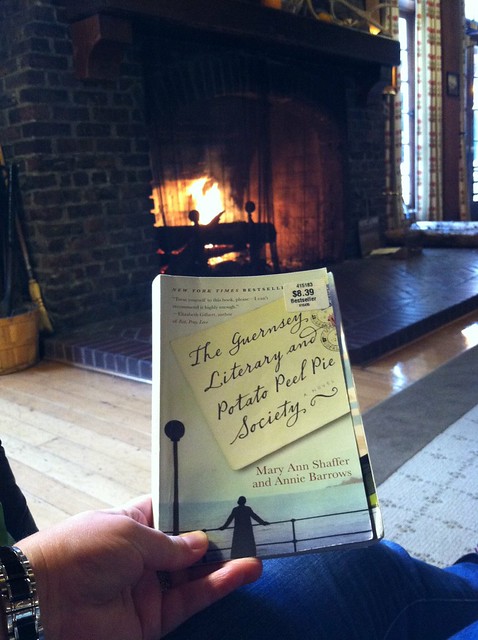
Over an anniversary weekend away with my husband, I had some time to read in the Lodge lobby by the great big fireplace.

Last week I hit a milestone: 100 books read for the year.  And yet, that leaves 75 to go if I want to finish my 14 x 14 in 2014 challenge (and only 2 months to do it in - it seems not humanly possible).

Since the 100th book (which was Hickory Dickory Dock by Agatha Christie), I have read a few more:

  • Old Possum's Book of Practical Cats by T.S. Eliot (Poetry category)
  • Slow Family Living: 75 Ways Simple Ways to Slow Down, Connect, and Create More Joy by Bernadette Noll (Parenting category)
  • Dancing with Joy: 99 Poems edited by Roger Housden (Poetry category)
And then, on my weekend away I finished The Guernsey Literary and Potato Peel Pie Society by Mary Ann Shaffer and Annie Barrows (Around the World in Alphabetical Order category).

This "epistolary" novel (meaning it is written in the format of letters and telegrams sent back and forth between the characters) is the story of the German occupation of the Channel Islands and how the people survived and recovered, as well as a most delightful love story.  I'm using it for the G letter of my Around the World in Alphabetical Order category.

The rules of the Reading Challenge do allow me to apply a book to more than one category, so if I pick the books with care I could finish the challenge in less than 75 books - but still I need to get cracking with my reading!

Monday, October 27, 2014

The Years (A book post)

2014-10-13 15.08.18

Alas, I am accepting the fact that I am unlikely to finish my 14 x 14 in 2014 challenge on time.  It's a lot of books, folks!

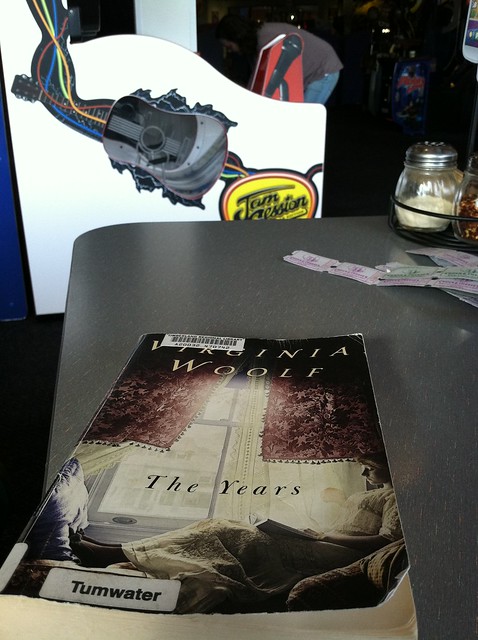
But here's another one down: The Years by Virginia Woolf.  I love the way Woolf writes, and her descriptive turn of phrase kept me going through this sprawling and disjointed look at one large extended family through forty years.  Time passes without any explanation of exactly what happened in the mean time, leaving the reader piecing it together through passing remarks and a few recollections. 

Along the way, the characters spend plenty of time musing and philosophizing about the meaning of life and just what they want out of it, and this adds to the plodding sense of tragedy as the years roll by and youthful possibility is replaced by elderly regrets and "what-if's". 

It's not all tragedy or meaninglessness, however, as there are moments described where characters find themselves sublimely happy.  Those moments are the times when the characters are alone and truly living in the moment, enjoying the world as it is now rather than looking to the future or to the past.


Tuesday, October 21, 2014

Why are we Overwhelmed? (A book post)

2014-10-21 14.43.57

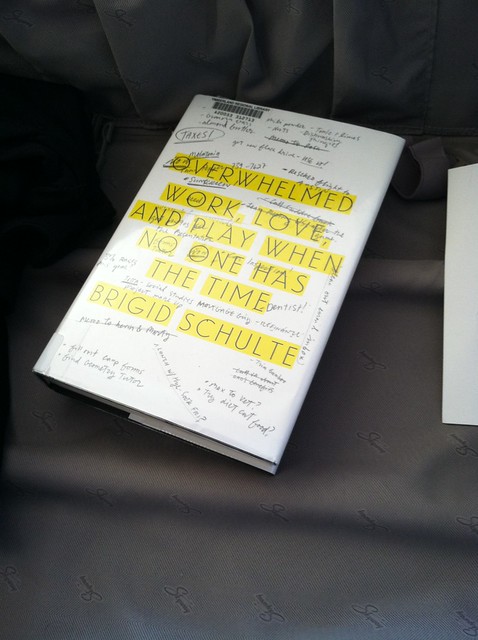
My latest read, related to Maxed Out which I recently read and posted about, has been another book on that same theme of parents trying to juggle work and love and play called Overwhelmed. 

Although the topic is very much the same, the authors' approaches differed.  While Alcorn is a blogger and coming from the tech business world, Schulte is a journalist.  Those different backgrounds show in the work.  Alcorn's style is much more personal memoir, but Schulte only uses a few personal examples and many more interviews.

Overwhelmed starts off with the author's encounter with a time-use researcher, and then follows her to a conference on leisure and time.  She concludes that it is about the balance in life between Work, Love, and Play and that forms the structure for the rest of the book with solid sections devoted to each of those three spheres. 

The book deals with both men and women, mothers and fathers, although there is more focus on women and parents.  But this is about what is going on with all of us - everyone who is caught up in the culture of overwhelm and busyness. 

This is a well-researched, thought-provoking, and ultimately useful book.  Now I'm mulling over the balance for myself: Work, Love, and Play.  Can I elevate play to equality with those other two?  Woah!  Now that feels like a challenge.

Saturday, October 11, 2014

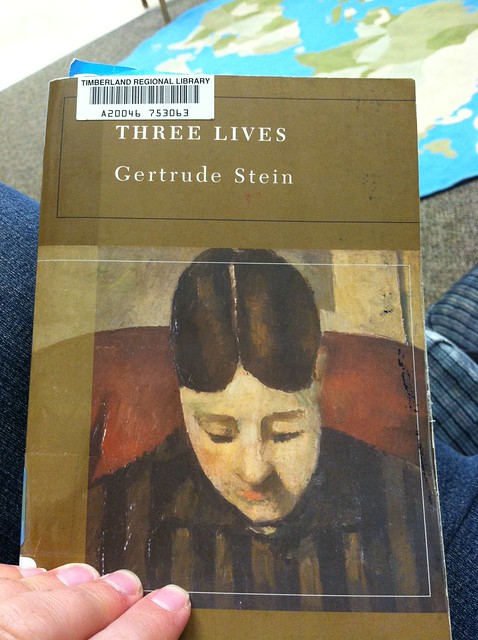
Does anyone actually read Gertrude Stein? (A Book Post)

Three Lives by Stein

I am still plugging away at my 14 x 14 in 2014 Reading Challenge, but with the realization that time is short I'm looking for more books that are "double dippers" and apply to more than one category of the fourteen. 

Since one of my categories is "Books to Read Before You Die" and another is "Women's Studies" I took the step of flipping through the 1001 Books to Read Before you Die looking for books written by women.  It's a depressingly smaller list - and forget about the selections from pre-1800. I was very discouraged as I flipped through the book and then it randomly opened to a page on Gertrude Stein.

Of course I know who Gertrude Stein was - she's notorious as part of that ex-pat group from pre-WWI, and as a lesbian.  But although most people I know seem to know who she was, no one seems to actually read her writings.  Her books were not part of any college course I took (including the Women's Lit class) - does anyone actually read Gertrude Stein?

I chose to read Three Lives and had a mixed experience with it.  Her narrative style, which avoids sticking to a plot line and instead seems like the sometimes repetitive descriptive style that would come from verbal communication, was refreshing and engaging for me.  This book is really just a trio of character sketches, describing the lives of three unrelated women: one controlling spinster german servant, one black woman, and one young german girl who was brought over and married off into another german family. 

I loved the first sketch, of "Good Anna".  Perhaps I just felt a kinship with her:

"She worked away her appetite, her health and strength, and always for the sake of those who begged her not to work so hard.  To her way of thinking, in her stubborn, faithful, german soul, this was the right way for a girl to do."

But when I got to the second life, that of Melanctha, I just couldn't tolerate the racism enough to actually finish reading it - so sadly I don't know what ended up happening to Melanctha.  I know the time period being what it was that I should try to read this in the context which it was written, but I just couldn't do it.  Boo to that.

And then, soured by that, I didn't enjoy the third sketch as much either.  By the time I skipped to that, I was spotting more racism and was irritated by the attribution of personality traits to the "natures" of various ethnicities. 

So, mixed results but at least now I can say that I actually have read Gertrude Stein!

Thursday, October 2, 2014

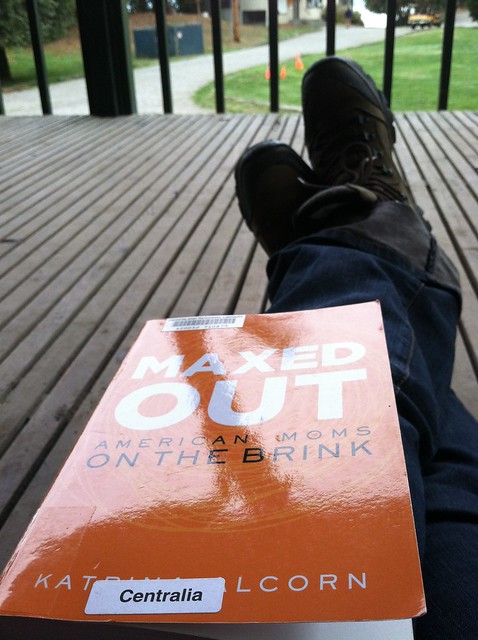
Why Are We Maxed Out? (a book post)

Maxed Out

I took this book to the middle school Con (conference/weekend at camp) that I chaperoned last weekend: Maxed Out: American Moms on the Brink by Katrina Alcorn.  The title of the book on my lap started some conversation among the parent chaperones taking a brief break on the porch of the dining hall (2 other moms and a dad).  Why do we feel so maxed out?  What forces push us into pushing ourselves to the brink?

I noted that often it seems to be a sense of competiveness that does me in - I simply have a hard time seeing anyone else do something (anything) without an inward thought of "I should be able to do that too".  The mom who is also incredibly fit and athletic?  I should be able to do that too.  The other mom who does lots of volunteer work?  I should be able to do that too (along with the fitness, this is additive and I don't give up the old goals as I pile on the new ones).  Clearly, this is unsustainable!

Another mom noted that she doesn't feel competitive, but rather overwhelmed with all the possibilities.  There were so many options available in life, and it made it hard to choose just enough without ending up with too much to do.  The other mom disagreed with both of us and noted that for her it was that there were just a lot of obligations and not really anyone else to do them.  Kids have to be picked up if there is no bus, family members have to be cared for, chores have to be done, money has to be earned and managed. 

In a somewhat stereotypical turn of events, the dad in the conversation didn't really relate to these notions of pressure that we moms were talking about.  I'm sure many dads do feel maxed out, but at least in the circle I talk to it seems to be based on actual external events far more than it is for us moms.  We seem to be doing it to ourselves in addition to taking on the external realities.

The author of this book is the creator of the blog "Working Moms Break" which I've been reading for some years now.  The blog talks a lot about the realities of balancing work with motherhood and on trying to make American work-culture more family-friendly.  The book is much more of a personal story, though, with only short side-bar conversations about the big picture of what is happening for other parents and how American parenting and working compares to other parts of the world.  And, as a personal memoir, of course the issue for the reader becomes how much you can relate to the point of view of the author. 

Just as I found when I read Sheryl Sandberg's Lean In, I could relate to some aspects of Alcorn's tale but not to others.  It would be easy to pick apart this story and call the author out with phrases like "just suck it up" or "plenty of people have it worse than you, so stop complaining".  But that's not the point at all - this is her life and I really can't judge another person and how they feel.  Alcorn was driven to panic attacks and illness by her efforts to be a working mother and had to step back for the sake of her own sanity, basically.  I have been there too, feeling like I was drowning and just desperately needing a way out.  I have struggled with the constant back and forth of "maybe I should just quit my job" when the juggling act gets too frenetic or exhausting.

Ultimately, Alcorn's story doesn't give me any answers for my own situation, anymore than Sandberg's did.  Whether I respond to the pressures by leaning in or by admitting that I'm maxed out, I think the real issue is not whether I measure my life against another woman's but whether I can STOP DOING THAT.  It's their life, and this is my life.

I'm sometimes Maxed Out because I try to be Everything to Everyone and because society is only too happy to let me do that.  I'm also maxed out because there are real barriers out there (sexism, opportunity costs, or as the narrator of a nature documentary I watched as child noted "it is harder for the female members of the group to keep up while also carrying the young")  I can Lean In and push harder against the barriers, but here's another truth I have learned in my life - at some point will and desire are not enough.  At some point the sacrifice of yourself and your health are too much. 

We need to keep talking about this, and the personal narrative has its place in the conversation.  Alcorn's is a perfectly decent addition to that part of the discussion: well-written, representative of a slice of the population, and trying for some objectivity.  It could be a great spur to conversation, such as the one I had on the porch.  If nothing else, bringing the pressures out and talking about them takes away some of the sting.

Tuesday, September 16, 2014

Update on What I'm Reading: End of Summer Edition

IMG_3338

The very last of the Beach Reads for this year: The Maltese Falcon by Dashiell Hammett.  Of course i had heard of this book and movie, but I hadn't read or watched it.  I'm quite glad that I finally checked out both the book and the movie.  The book was wry and dark and very entertaining, as I tried to follow along as Sam Spade unraveled the web that an alluring woman pulled him into when she walked into his office one day.  The movie, starring Humphrey Bogart, was charming.  Bogart did such a good job of walking the line between charming and horrible misogynist - it was a masterpiece. It was also a Triple Dipper on my 14 x 14 Reading Challenge, since it fit into three categories: My Favorite Detectives, LifeTime Reading Challenge, and Books Made Into Movies.

I need more double and triple dippers if I'm going to finish this challenge in time!

Other books I've finished:


  • The Artist's Way for Parents was one I read for work.  I was never a follower of the Artist's Way, but I know it has influenced and inspired many people.  So when I heard there was a new edition for Parents, I knew I should check it out and see if it was worth recommending to the parents in my congregation - and it is.  It's still not really for me, but I can see how it could be great for many folks.
  • How We Love Our Kids takes the notion of Love Styles/Languages and applies it to parenting.  I found many of the ideas really intriguing - heck, I'm already a fan of the whole Love Languages Idea - but I also noted that personally I had a hard time deciding which type I was based on these descriptions.  I felt a resonance with several of the Parenting Types, and that was somewhat contradictory.  None-the-less, this is a thought provoking book that challenges parents to move beyond the love style they inherit from their family of origin, work with the love style of their parenting partner, and try to honor the inherent love style of the child they are parenting.  Whew - that's a tall order but imagine the possibilities if we could all pull it off!
  • Hope on a Tightrope is an older book, but after the recent (Ferguson and after) conversation about race in america I found it once again poignant.  Dr. Cornel West is an amazing writer, and this book is the short and sweet version of his thoughts - full of bold inspirational quotes this is a very quick and easy (but not simple to mull over) read.  
  • Fed Up With Frenzy is another call for slower and simpler parenting, but this one has a serious flaw: after just a brief introduction it proceeds to a long list of things (slow things) to do with your kids.  As a Fast Parent, this could be read just as MORE to do!  Then in the back of the book there are chapters about EveryDay Slow and Slow Parenting - but by then it would be too late for most readers.
  • Your Presence is Requested at Suvanto was a pick for my "Around the World in Alphabetical Order" category.  It is a tense atmospheric drama set in an institutional hospital in Finland, but it suffers from a long build-up and weak ending.
  • The Collected Poems of May Sarton was my latest for the "Poetry" category of my reading challenge.  I hadn't ever read Sarton before, but she is a UU author and so I looked this up.  I loved her poems, with such imagery!
More reading adventures ahead: So many Books, So Little Time!


Monday, July 28, 2014

What I'm Reading: Plath, The Book Thief, and All Joy, No Fun

IMG_3142

A glimpse into my recent life as a Reader.

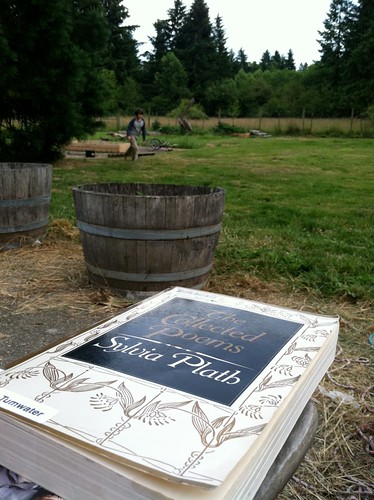
The Collected Poems by Sylvia Plath were interesting.  As the collection is organized chronologically, I wasn't sure whether I was just warming to her as I plowed through the collection or whether I was noticing her own maturation as a poet - but the beginning of the collection did not impress me and I had to read many poems before I started to warm to them.  Her reputation is so huge, but I've never read the actual poems before, so it was good to actually go to the source material.

Meanwhile, The Book Thief took me a ridiculously long time to finish because I bought it on my kindle ... which the kids keep "borrowing" and not bringing back to me.  When I did get a chance to read it, though, I loved it.  Narrated by Death and set in Nazi Germany, the book could have been one huge cliche.  It escaped that fate, however, and managed to both surprise me and bring me to tears.  So, so good.

And finally, I managed to finish All Joy, No Fun this week.  The author set out to write a book about parenting with a different question: instead of asking what effect it has on the kids, what effect does modern parenting have on the parents?  Riffing off a study that showed that parents had lowered rates of happiness and well-being compared to peers without children, the book explores many of the issues of modern parenting through both qualitative case studies and reviews of more quantitative data.  There are some very thought-provoking things in this book if you are a parent, especially a parent of the middle-class variety (which the author does state in a disclaimer was her primary focus).  I was left with some deep musings about the modern phenomenon of the "useless" child - the child who does not contribute to society or the family through labor of any kind but is instead the receiver of care, goods, resources, etc.  I might have more to say about that in another post.

The reading continues!


Thursday, July 17, 2014

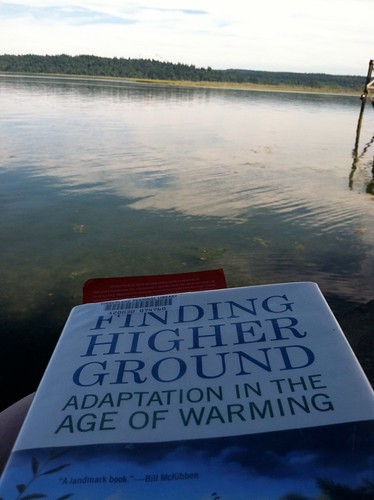
What I'm Reading: Finding Higher Ground

IMG_3158

Climate change is a depressing topic, let's be honest.  Whenever I read another book about it, I typically feel guilty, sad, mad, fearful, and depressed.  And yet, I can't stick my head in the sand and pretend this isn't happening - it's real, it's here, it's happening, and what are we going to do about it?

Finding Higher Ground: Adaptation in the Age of Warming by Amy Seidl was a different kind of climate change book.  Here, there is very little doom and gloom and more tales of fascinating adaptations that are already taking place in the natural world, and the challenge for more adaptation in our cultural world.  Seidl tells us about drought resistance evolving in plants, about changing migration patterns for birds and butterflies, and about folks experimenting with rice farming in Vermont.  She looks at solar energy and local food sheds, and challenges the reader to think of their own higher ground.

A quote from the book:

But higher ground also lies in territory beyond these pragmatic actions.  it is in our determination to care about what we love, to protect life that is threatened, to grieve for what is lost, and to believe that we can endure the Age of Warming.  The biological and cultural environments that we have depended upon in the past will undoubtedly change.  But the adaptations we bring into existence will be the very makings of our persistence.

I highly recommend this book!

Wednesday, July 2, 2014

Half-Way There Reading Challenge Review

reading post

As of the end of June, half of my 2014 reading year is up.  How am I doing on my 14 x 14 in 2014 Reading Challenge?


One Category Finished: Children's Lit

What fourteen children's books did I read (with my kids)?


  1. Children's Lit
    1. Squire by Tamora Pierce
    2. Lady Knight by Tamora Pierce
    3. The Burning Bridge by John Flanagan
    4. The One and Only Ivan by Katherine Applegate
    5. The Book of Three by Lloyd Alexander
    6. A Dog Called Homeless by Sarah Lean
    7. Flora and Ulysses: The Illuminated Adventures by Kate DiCamillo
    8. The Red Pyramid by Rick Riordan
    9. Throne of Fire by Rick Riordan
    10. Shadow of the Serpent by Rick Riordan
    11. Summer of the Gypsy Moths by Sara Pennypacker
    12. The Incorrigible Children of Ashton Place: The Mysterious Howling by Maryrose Wood
    13. The Incorrigible Children of Ashton Place: The Hidden Gallery by Maryrose Wood
    14. The Icebound Land by John Flanagan
Of these, my favorites were The One and Only Ivan  and Summer of the Gypsy Moths, both because they were about real life issues of home, independence, and relationships and both because they were heartfelt without being too maudlin.  A Dog Called Homeless was also very heartfelt (and it made me cry while I read it out loud) but it was a bit too obvious in its emotional manipulations.  Flora and Ulysses was quirky and adorable, and a really fun book that had us all saying what is this book about?  What is going on!? but in a good way.  The Incorrigible Children series is great silly fun and a great vocabulary builder - it's one of those books that uses the big words and then also explains what they mean to the kids but it makes sense and doesn't break up the flow of the narrative.  The rest on the list were also good, but pretty standard fantasy adventure fare.  Not that I don't enjoy fantasy adventure - I do!  

One Category Half-Finished (so on track, I guess): Books Made Into Movies 

  1. Books Made Into Movies
    1. The Great Gatsby by F. Scott Fitzgerald
    2. Ender's Game by Orson Scott Card
    3. Horns by Joe Hill
    4. The Old Man and the Sea by Ernest Hemingway (*double dipper)
    5. Divergent by Veronica Roth
    6. Cloud Atlas by David Mitchell *(double dipper)
    7. The Fault In Our Stars by John Green
This turns out to be a diverse collection - lots of different sorts of books get made into movies!  I'm also trying to watch the movies after I read the books, but I haven't seen the newest (not available on netflix yet) from this list. I did not like the adaptation of Ender's Game into a movie - the book was much better.  I did like the adaptation of Cloud Atlas (a crazy book to even try to adapt into a movie!) and the movie of The Old Man and the Sea is so faithful to the book I could say lines out loud right before the narrator said them on the movie.  Oh - and I watch both versions of Great Gatsby.  Gotta go with Robert Redford on this one!

None of the other categories are on track, although many are very close at either five or six books read:

1.  Religion, Ethics, Philosophy, and Spirituality
2.  Self-Improvement and Lifestyle
3.  Work Related
4.  Science and Psychology
5.  History
6.  Just for Fun Reads

And then some are really trailing at only 3 or 4 books read:

1.  Parenting
2.  Women's Studies
3.  Poetry
4.  Books to Read Before You Die
5.  My Favorite Detectives
6.  Around the World, in Alphabetical Order

For the full lists, you can look at my Challenge Page.   OK - enough blogging, I need to get back to reading!


Monday, June 23, 2014

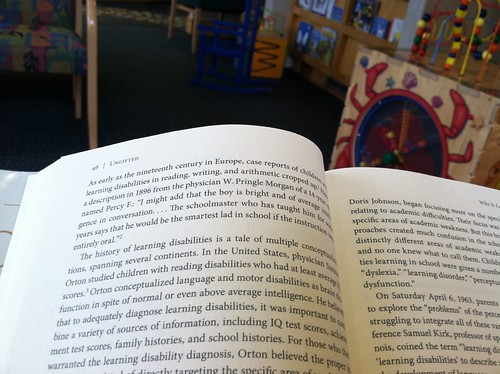
What I'm Reading: Ungifted

IMG_3071

It's a big book with more than one subtitle: Ungifted: Intelligence Redefined: The Truth About Talent, Practice, Creativity, and the Many Paths to Greatness by Scott Barry Kaufman.

Kaufman tells a fascinating story about intelligence, weaving his own personal life story with both the history of the changing science and understanding of intelligence and the latest findings and speculations in the field.  Kaufman was labeled learning disabled as a child, and became fascinated with understanding intelligence in the abstract and his own in particular.

IQ, mindset, potential, talent, creativity, effort, and the g factor are all discussed and sometimes the book gets a bit dense.  I am a tad rusty on my understanding of statistics, and had to do a little refresher to figure out some of this.  But although the material has serious weight to it, it is also presented in a very interesting way and I found it fascinating.

The validity of testing and the labels "learning disabled" and "gifted" are also really challenged here.

The implications for education are that we should be addressing the whole child with work on cognitive strategies, maximizing each individual's strengths, and encouraging a growth mindset and lots of deliberate practice.  Intelligence is earned through effort, not fixed at birth.

Quotes:

Counterintuitively - and contrary to the practice in most schools - the most efficient and cost-effective route to obtaining the best academic outcomes for all students is not a narrow focus on content but a focus on the whole child, including their social, emotional, and physical development.

The deep implication here is that there should be no external pressure to realize a goal at a particular rate.  The comparison isn't with others; it's with your former and future selves.  If we rid ourselves of the notion that any of us ever reach a state labeled "failure", then there's no problem whatsoever in encouraging people to engage with a domain.  

This suggests we should encourage children to dream the impossible, to think beyond the standard expectations, to dare to be unrealistic.  Such encouragement promotes the importance of perseverance and questioning the established order.  What's more, this instills in all people a mindset of lifelong learning and growth.


Monday, June 16, 2014

We Need Diverse Books

IMG_0585

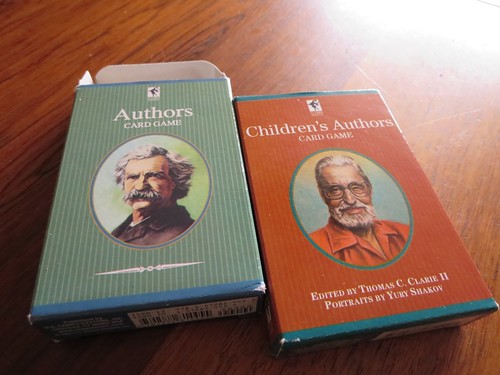
Did you ever play Authors?  This was one of my mom's favorite games when I was a kid, and I remembered it fondly.  When I recently ordered a set for my family to try out, however, I had one of those uncomfortable moments when you see a childhood thing and realize how biased it was.

The authors are all white, and there is only one woman author.  My kids noticed it at once, and I'm proud of them for that.  But darn - I really liked this game when I was a kid, and it actually greatly influenced my reading list.

And that means that I missed out on a lot of good books that would have broadened my horizons.  Reading is the closest I can come to understanding a world, a place, a time, or a life that I can't actually live.  A good book gives the reader a chance to step into other shoes in a way that nothing else does.

The We Need Diverse Books campaign has made waves recently, and it is bringing much needed attention to the issue.  Not only do we need diverse books because everyone should be able to see themselves represented somewhere in the library shelves or the bookstore, but we also all need to explore beyond our own lives and beyond people who look or live just like we do.

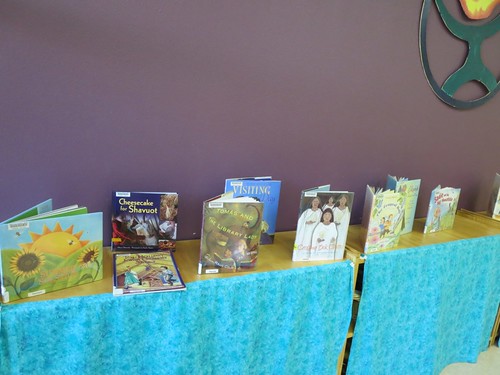
IMG_0547

As a teacher, it is my job to surround the children I am educating (my own and the children at church) with books that celebrate diversity, promote acceptance and compassion, and open their minds to a larger vision of the possibilities of life.  All teachers should be curating the books they surround their students with, and there are helpful guides out there that can point us in the right direction.

(I also have a recommended reading list on my other blog right now, reflecting some of the good books I've found recently.)

Is it a lot of work to re-sort and re-evaluate your collection?  Yes.  But this is important, incredibly important, work that we all need to do.  And, it is also a joyful and fun task!  Goodness, there are some amazingly good books out there that are both representative of diversity and just lovely books in their own right.  If you love books, then realizing that you've only been getting just a slice of the them by reading your standards means that now you have a whole new world to explore.

But we only have them to explore if they get published, and so seek them out, buy them, and demand that publishers give us diverse books!


Thursday, May 29, 2014

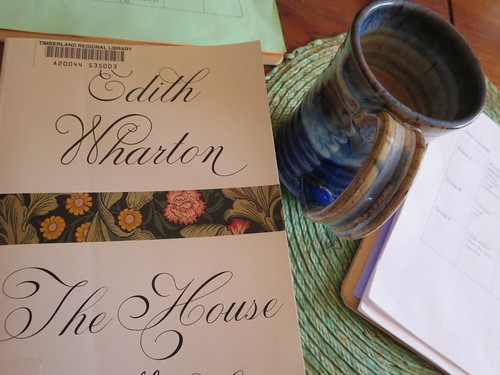
Weekly Book Post: The House of Mirth

IMG_0441

I've decided to switch up a few of the categories for my 14 x 14 in 2014 Reading Challenge, and one of the new categories is based on a "Best Books by Women Authors" list I found online.  I'm not sure if I'm going to stick strictly to that list or branch out, so for now I've named that category "Women's Studies".  It shouldn't be an issue, since women make up more than half the world population, but it is still easy when picking "serious" books to read to fall into a pattern of reading all dead white male authors.  No thank you!

So far I've read three books for this new category:

1.  The House on Mango Street by Sandra Cisneros
2.  The House of Mirth by Edith Wharton
3.  Bossypants by Tina Fey

House on Mango Street was a surprisingly small and simple book, so much so that I read it in only about a day.  But the simplicity is only skin (or page) deep, as the prose, ideas, and images linger much longer than the book itself.  Cisneros taps into her own childhood and experience growing up Latina, and paints a picture of her neighborhood and the people living in it, ultimately also pointing to how trapped many of them are in generational poverty and underprivileged status.  It's a must-read - ignore the reviews that call it confusing or over-rated.  I loved it.

House of Mirth (why are the titles so similar - coincidence) is a very different animal, except that it once again is the work of a woman who was looking back to the milieu she was raised in and using literature to point out how trapped people can be by that environment.  In this case, Wharton grew up in affluent New York society during the Gilded Age, and here writes a tragic novel about how that world can destroy a woman who just couldn't quite conform and wouldn't compromise what she wanted.  Although the heroine might be easy to dismiss as foolish and vain (like Madame Bovary), Wharton paints such a thoroughly human picture of her that the reader must still like her and sympathize with her plight, rather than blaming her for her own misfortunes.

I listened to Bossypants as an audiobook on my phone (with my new Audible membership - so far this is a wonderful thing), having Tina Fey's voice in my ear as I did chores around the house or garden.  Although the book is funny, it is also very much about sexism and the pressure on women today.  I particularly liked the parts about Fey's childhood and early start in comedy.


My plan for the next books in this category involves Sylvia Plath and Virginia Woolf.  Any others I shouldn't miss?

Friday, May 16, 2014

Weekly Book Post

IMG_2960
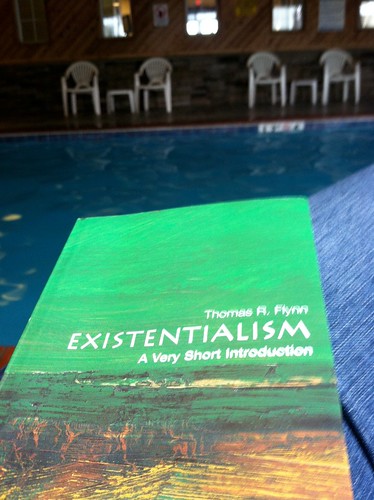
Poolside reading, anyone?

I'm progressing at a decent clip on my 14 x 14 Reading Challenge, but my mother - my mother is a crazy reading machine!  She is actually adding on new categories, and it looks like she will do a 20 x 14 Challenge this year.

My competitive spirit was chastened, but I just have to give her kudos for the gusto she brings to reading and learning.

On my side of the challenge, I have finished 56 books so far this year.  I'm enjoying having the time to read more novels and "fun" books, but I've also made an important realization about my own lifetime learning.

I really like philosophy and theology and Big Ideas, and it doesn't matter if I have an official assignment to read them or not.

BUT ... and it's kind of a big But ... if you are going to read this type of book for fun it seems you need to be careful not to bore your friends and family to death babbling on about them.

It's not just a problem that readers have, either.  My son loves to tell me all about the latest video game obsession he has, and I try, I really do try, to be interested.  But so often it just goes in one ear and out the other.  Recently I was talking to my husband about the book I just read, Existentialism: A Very Short Introduction, and the look on his face suddenly reminded me of how I imagine I look when my son is talking about his video games.  I was guilty of just talking at my husband and it was making him glaze over.

There are many topics and ideas in this world that we can become excited about, and there is nothing wrong with just learning for learnings sake.  You don't have to get a grade for it, and you don't have to even share it with others.  Just Read.  Just Learn.  Just Think.  And enjoy!

Thursday, April 24, 2014

Weekly Book Post: Notes from a Blue Bike

image

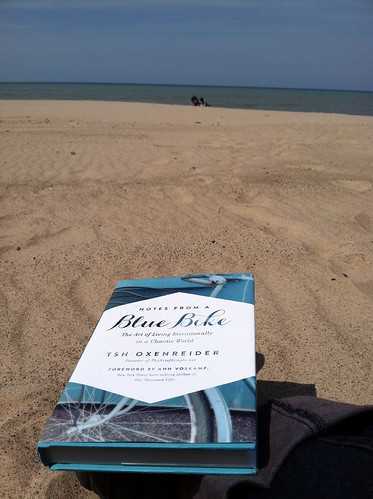
I was sitting on the beach in Indiana Dunes State Park, watching my kids play in the sand, when I finished Notes From a Blue Bike: The Art of Living Intentionally in a Chaotic World by Tsh Oxenreider.

It was both a perfect and a frustrating vacation read: perfect because as the author talked about traveling with her kids as part of her intentional life I could nod along and say, "yes, it's a wonderful bonding experience"; and frustrating because discussions of food choices and budgeting made me want to make intentional changes in our life in those areas, and we can't really do that in the midst of a road trip.

This memoir, by the author/editor of the community blog The Art of Simple, encourages us all to choose how our families will live, rather than be swept along by our culture.  Oxenreider was inspired by her experience living in Turkey with her young children to seriously reflect on how we live in the U.S., and decide to carve a countercultural path for her family.  The book is divided into sections based on the major life-issues the author has had to grapple with: food, work, education, travel.  Their choices are very different from mine (for instance, they can't even keep a pet because it would interfere with traveling - I find traveling nerve-wracking and am torn over the carbon-footprint of air travel and I have 20 chickens and 6 goats, etc. back at my home place), but it makes me wonder about what my major areas of intentional living are.

The book reads like an extended blog post from the author's blog.  If you are a fan of the blog, you might enjoy this extended version and the big picture frame it gives to Oxenreider's journey.  If you are looking for something more in-depth or with practical how-to's, you will need to look elsewhere.  Oxenreider doesn't try to give directions to others for their intentional lives - she acknowledges that everyone's choices will be different.  Instead, this is a personal tale told with the hopes of inspiring others.  I was inspired - you might be too!

Thursday, April 10, 2014

Weekly Book Post: Six Degrees, The Ocean at the End of the Lane, and the House on Mango Street

IMG_0013

Six Degrees: Our Future on a Hotter Planet by Mark Lynas scared the c**p out of me.  This is a detailed (graphic even) account of what might happen (based on the many scientific studies out there) as the planet warms by one, then two, three, four, five, and six degrees (Celsius).  The writing is good, but I had to force myself to finish the book.  It's just too sad, too depressing, what the future may bring. And yet the author does a good job of arguing that we cannot let ourselves be paralyzed by that depression, that the only moral thing to do is to fight tooth and nail, to not go silently into the future or be complicit in the end of our one precious life-giving planet.

I am very motivated to live a lower carbon-lifestyle, and to advocate for larger changes.  More about that in a later post.

Another book I finished last week: The Ocean at the End of the Lane by Neil Gaiman.  This slim book is hard to categorize - magical, lyrical, about children and yet not appropriate for children.  It is like the dark truth about childhood, and how children see the shadow or magical side of life but then forget.  But it's a lovely and captivating book, for those willing to take the strange journey with it.

And then there is The House on Mango Street by Sandra Cisneros.  Cisneros sets out to tell the story of her childhood, and to represent those who were not able to leave that world as she did.  In subject matter it reminded me of a Latina A Tree Grows in Brooklyn.  Her narrative (or lack thereof) style was at first disorienting, and then just perfect.  Each tiny chapter is just a vignette, and frequently the "story" was just getting going when it was left behind, like a letter or a journal entry. A very quick read, but one that will stay with me.

Happy Reading!

Monday, March 31, 2014

Weekly Book Post: Mindful Parenting and How to Live in the World

image

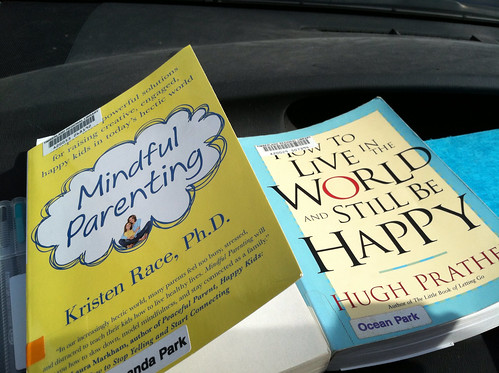
Last week I read two more books that encouraged mindful living: Mindful Parenting by Kristen Race and How to Live in the World and Still Be Happy by Hugh Prather.

The first book is a mix of information on brain research and psychology, recommendations for common stressors, and then techniques and exercises for mindfulness suitable for various different ages.  I found it to be a reasonable, "middle path" in its recommendations, and to be practical and easy to understand.

A quote from the book:

But there is only so much you can control from the outside.  No matter where you are, there will always be stressors, and if you don't have the tools on the inside to manage the stressors in your life, your external environment becomes irrelevant.

Prather's book is a meditation on choosing happiness through mindfulness and gradual enlightenment.  It is about happiness from within, not dependent on external circumstances.  I found parts of the book very thought-provoking, and a few practical ideas for keeping my focus on my intention throughout the day.

A quote from the book:

True happiness is flexible because it is geared to an inner state that can be controlled and not to the world, which never can be.  There will always be interruptions, and this must become unimportant.


Both have been good resources for my continued journey to a more enlightened and mindful inner self.

Saturday, March 15, 2014

Weekly Book Post: Hands Free Mama

I've just read Hands Free Mama: A Guide to Putting Down the Phone, Burning the To Do List, and Letting Go of Perfection to Grasp What Really Matters by Rachel Macy Stafford.  There is also a blog of that name.  I absolutely recommend the book to folks like me, that is to say to moms who are prone to taking on too much and trying to be too "perfect".

But first, I had a few immediate reactions to some aspects of the book that might trouble some readers:


  1. The author is very clear that she believes in God and is comfortable using language such as "God-given talents", or "what God wants from me".  I know many readers who are put off by any mention of religious language in a book like this, but I would note here that Stafford's mentions of God are always personal and do not play into her advice to others.
  2. This is also pretty clearly a story of privilege.  Obviously, only some moms have the option of putting everything else to the side to focus on their kids.  If the phone and the To Do List are for work, you probably shouldn't just forget about them or you'll soon be looking for a new job.  But, once again, I don't see Stafford trying to say her way is the only good way.  She is telling a personal story, with tips and exercises for you to use to reflect on your own personal story, but the implication isn't that we all need to live exactly as she does.
  3. And, lastly, this book is all about the Mamas, and doesn't talk too much about what Dad is doing in this picture (let alone any other possible family constellation).  As many have noted, there is a very fine line between reassuring moms that they are important as moms and leaving moms holding the bag all alone for everything that needs to be done and every sacrifice for family and children.  Some good thoughts on that issue here (long, but good) at Raising Faith.

With all that out there, now I'll say that I really, really liked this book.  I would - almost - add it to my "life-changing" shelf, but the verdict is still out on whether or not it does change my life.  But it's safe to say that it was the right book for me at the right time with the right message, and that I was deeply moved by it.

Rachel Macy Stafford starts off by describing herself during her "distracted days" as being that woman who was praised for her ability to "do it all" and took great pride in her busyness.  Then she had a moment of epiphany, or as she describes it a breakdown, and was brought to a screeching halt by the realization that she was missing something - she was missing profound connections with other human beings, she was missing the beauty of sunsets, she was missing chances to love.

As she says in the book, she was "managing life instead of living it".

So she decided to go Hands Free, and for the rest of the book she tells stories about that journey and its challenges and rewards, and gives little prompts for reflection and challenges for others to try and put this practice in effect in their own lives.

(One big practical idea she mentioned was creating a "life list", or a sort of mission statement for your own life calling, and then using that as a guideline for what to say "yes" to and what to say "no" to, in order to not get overcommitted.  I am a huge "list person", so this idea appeals to me and I'm working on my list right now.)  

The book will not appeal to everyone (see list of problems above), but if you are either a similar or a sympathetic soul to the harried do-it-all supermom of suburbia, I would put this book into your hands.

"There will never be a finish line.  But there is something far better.  Every single time I let go of distraction to grasp what really matters, I am embracing life.  And life will embrace me back."

--Rachel Macy Stafford

Saturday, March 8, 2014

Book Post: Too Many Books!

DSCF0214
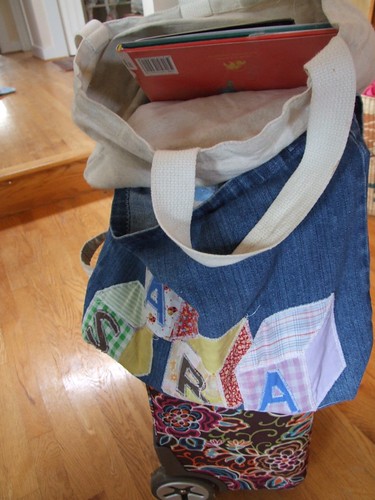
A tower of books and book bags!

It's been too long since I did a weekly book post, and now I have too many books to talk about.  Since I am on sabbatical from my church work, we've been dedicating a lot more time to our homeschooling and I also have more time to read whatever I want since I finished all the work up for religious educators credentialing ... and the result has been that we overwhelmed the limits on our three library cards.  I've also had to resort to always bringing the rolling cart to the library, because I pulled a muscle in my shoulder carrying all our books out one day.

Yes - I got a library related injury.  Reading can be dangerous!

Fortunately, a friend reminded me that I could get an institutional library card as a homeschooler, and that has been a huge help.  Now I can have 200 books out at a time, instead of only 150.

And we've had some good ones!

Picture Books

As my children get older, we could leave the picture books behind us, as I know many people do.  But what a loss that would be!  Picture books pack a dense punch, with the ability to fit content, lyrical poetry or prose, and amazing art all into one slim volume and one sit-down snuggle on the sofa.

DSCF0227

We read two this week that have been getting a lot of attention and awards:

We Are Stardust and Locomotive.  They were both lovely, but Stardust was especially amazing with the best illustrations I've seen in a long time.

Reading Out Loud

DSCF0233

We are currently reading A Dog Called Homeless as our family read aloud, and it is lovely.  Told from the perspective of a grieving and lonely child who is seeing her dead mother appear to her in the company of a real stray dog, this is a dose of magical realism and a reminder that friendship and love can transcend barriers.  The writing is deceptively simple, in a lovely reflective way.

Audio Books

We've just finished listening to The Book of Three in the car.  I had forgotten how funny that book is!  It is always good to revisit a book you read in your own childhood, now in the company of your children.

My Reading

Cloud Atlas has been occupying most of my reading time.  It is a really good book, but at times it was good in a "look at how clever/brilliant/skilled the author is" sort of way rather than in a "I'm so engrossed in this story" kind of way.  I was very impressed with it, but it took me a long time to read.  Post-modern fiction built like a stacking puzzle will do that to you!

As a brain-palatte-cleanser, I binge-read Insurgent (the 2nd book in the Divergent trilogy) in less than 12 hours.  A good and pretty straightforward action-packed young adult novel.

Meanwhile, there is a huge pile here for me to keep on reading!


Thursday, February 20, 2014

Weekly Book Posts: Lifetime Reading Plans

DSCF0207

Do you have a lifetime reading plan?  There are lists out there, such as Fadiman's, or the book I own 1001 Books You Must Read Before You Die, and any one of these lists could be a good starting point if you are interested in making a lifetime reading plan.

There are some arguments to be made against any effort to establish a literary canon of what is good literature and what isn't, with the most compelling being that it often privileges the works of dead white guys over the voices of the marginalized or different.  But when I look at most lists now, they are clearly making an effort to branch out and be more inclusive.

So what is cool about a list like this?  It is challenging, it takes us further as readers than browsing our local bookstore would, and it can remind us to read older works.  But mostly, for someone like me who is a lover of reading and listology, it's just compelling and enjoyable to try and read them all and keep track as I go.

DSCF0209

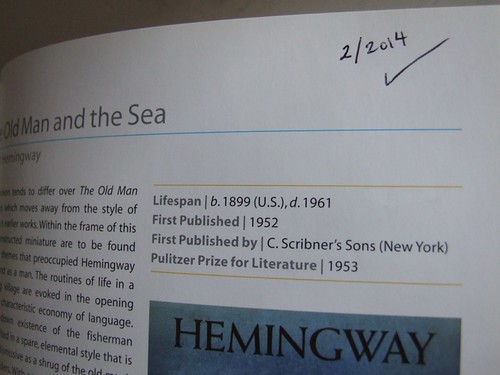
One of my 14 x 14 in 2014 categories is "Lifetime Reading Plan", and I am using the 1001 Books to Read Before You Die list to select 14 titles I had not already read and to read those this year.  So far, I've read The Old Man and the Sea (a double dipper, since it also counts for my category of "Books Made Into Movies").  I very much enjoyed this sparse and taut little novella about man versus nature.  My next pick from the list is Crime and Punishment.  

What books would you consider "must-reads" in a lifetime?