Wednesday, March 21, 2018

Homeschooling with a Budget


The actual costs of homeschooling can be hard to calculate (although this blogger did a good attempt at it: https://www.families.com/the-cost-of-homeschooling-vs-the-cost-of-public-school).

After all, the costs include:
  • The parent(s) time and possible loss of income
  • Space set aside in your home
  • gas and wear and tear on a vehicle for driving kids all over the place
  • library fines for all the overdue books
  • memberships and admission fees for museums and zoos 
  • dues for homeschool groups and co-ops
  • books and curricula
  • art and office supplies
  • science kits and lab equipment
  • camps and class fees
  • musical instruments and lessons
  • sports equipment and registration fees

The calculation of how much it actually is costing us to choose homeschooling is further complicated by this question: how much of this would we pay for even if our kids were in public school? Sure, much would be covered by the schools, but we'd probably still be paying for private music lessons as an extra, and summer camps, and art supplies.

But it can't be denied that homeschooling and educational costs are one of the larger line-items in our family budget, and this year we needed to make a reduction in that line-item. Last year we spent $11,000 on educational expenses. This year, our goal was to make a 33% reduction. How?

I started by looking at what we had spent in the previous year and identifying "non-negotiable" expenses: math curricula, books, etc. Then we took the budget amount left after those items were covered and gave half of it to each of the kids as a discretionary educational budget for the year. They are old enough now to make their own choices, we decided.

Each of the kids are working with a $1500 budget for the year. They are researching the costs, considering their priorities, and managing a budget ... it's educational in its own right. But it's also been really hard ... mostly on me! I hate for them to miss out on ANYTHING! It's like I have FOMO for educational opportunities. A camp that I hear other parents talking about? My kids should do that! A second musical instrument? Yes! Private lessons? Give us more! 

Where does that cycle of more actually get us? Tired and broke? There's a "keeping up with the Joneses" competition that we can all get sucked into, even when we start from a genuine and loving place of just wanting to do good by our kids.

My kids have not been upset or stressed over this reduced budget, and they've appreciated the feeling of empowerment to make their own choices. It's funny to realize I've been the one pushing us into over-doing and over-spending, and the kids are happy to skip the camps and the lessons. This is good for us on so many different levels!

Monday, March 12, 2018

Community Schooling


We've reached a wonderful age, when the kids can participate in the community as volunteers, and in the process learn a lot of great skills. We've been painting sets at a community theater company, and while we were there they were recruited into being stage hands for the upcoming show. Now they are learning from a lovely set designer and stage manager, having fun and getting a practical education in the tech side of theater.

We aren't really only "Home"-schooling, at all. We are schooling out in the community, and learning so much!


Monday, February 26, 2018

Spend Time Together, These Days Are Precious


I've recently seen a bunch of stats (haven't had much luck tracing them to the original studies, so I'm not saying they are good stats and I'm not linking here) about how much time families spend together ... and it's supposedly averaging to under 30 minutes a day now!

That's pretty shocking to me. 

And, again, it makes me reflect on how much I love the homeschooling lifestyle. My family spends time together - working alongside one another, but also playing and eating meals and engaging in planned "together" time. My 12 year old, in particular, has been asking for even more together time with me recently, such as a "poetry date" where we went to a local bookstore, picked out a poetry book together, and then took it across the street to a coffee shop and read poems out loud to each other while enjoying a hot beverage.

Or there is a new fad in our house: "doing hygge". We sat down with cups of tea, lit some candles, and chatted about how to create more hygge in our lives. Then we played a couple quick games of Six

I won't lie ... I'm just as busy as the next parent and sometimes it's hard for me to carve out this time to be with my kids. But they are growing up fast, and although it's a cliché, soon enough they won't be asking me for this time anymore and I know I'll miss them then. So thank goodness we can spend this time together now. 


Wednesday, February 14, 2018

Learning by Working Alongside


Before there were formal schools, the way young people learned was by working alongside older people. Families and communities worked together, or apprentice programs formalized that arrangement for learning a new skill.

In general, our society doesn't function this way anymore. Specialization, formal schooling, and increasing age-based segregation all contribute to the loss of this old pattern of learning, although they also introduce new ways of learning.

I like the new ways of learning too. I've always loved "book learning" and really enjoyed college, and I now also love youtube videos, and will happily learn how to prune a rose or pluck a chicken through a video.

But I remember learning to sew by working with my mom, and I don't know that it would have ever occurred to me to try and learn it if no one had modeled the activity and skill for me. 

Homeschooling means the kids are just closer in proximity to their parents' work. They are with me for most of the days, whether they go with me to my paid employment (as I did with my parents when I was homeschooled) or are with me for my domestic housework. It gives more opportunity for them to learn by helping, whether they are making French fries, gardening, building a shed, or ironing their Dad's shirts. 

I love this kind of learning!

Friday, January 26, 2018

Homeschool Book Club


We are very fortunate to have a wonderful group on Meetup.com that we are part of ... but unfortunately we are way out on the geographical outskirt of the group. This means that we see all these wonderful group events posted, but for us to attend most of them would require a one hour or more drive each way.

There are some of us down here on the outskirts, but we just don't have the critical mass. So I decided that I needed to either quit this group this year, or make an effort to host more events in this area. In the summer it was easy, as I could host playground meet-ups.

I tried one event with a high dollar cost, and was pretty burned by folks not able to come because of a traffic problem.

But then we had a book club meeting, in a coffee shop. Most of the others no-showed on us, but we still had a great time with the one other person who did show up. I thought this was great! We read a book for our homeschool, and had fun talking about it with another homeschool family. I'll try this again!

Thursday, January 25, 2018

Staying in Control of the Home School

 Homeschooling can be a little chaotic in the best of times, and when I'm also working a full-time job and managing a little hobby farm and being an active citizen, etc. .... Well sometimes the question is "how much of the schoolwork can we get done in this waiting room right now?"


 Starting off the new year I put together a new Life Management Binder for myself, and one of my tabs is definitely "School". I took time during the break to make collage pages for each area of my life, envisioning what I want out of them. I'm envisioning a homeschool that runs smoothly enough to be the very best of what I hope for in education: inspiring, socially responsible, life changing, sustainable, and resilient. 

 And, perhaps most of all, I just need to feel a sense of CONTROL. For some that is a bad word ... that might be exactly why some folks homeschool in the first place, to get away from all the Control and Authority. But the opposite ... total chaos .... I find to be very bad for my mental health. And I think it's important for my children that they have two parents who are taking good care of themselves!


The binder is working out well for keeping this balance, so far. I use homeschoolmanager.com to track assignments and to create weekly check lists, and I print two copies (one for the kid, one for me to keep in my binder). I also have all the quarterly syllabi and other organizational documents in my binder. Then, when I want to check on what the kids need to do still in any given day, we sit down together and go through the checklist marking things off. Since we are working at home, in the car, at the office, and all sorts of other places, a portable system was a must.

It's only a tiny glimmer of control, but it's enough to keep me sane. ;)

Wednesday, January 17, 2018

A Free Racial Justice Education Game


I want to recommend that homeschooling families check out the excellent (and Free!) work being shared as The Road to Racial Justice Game. http://www.roadtoracialjustice.org

It is most appropriate for ages 13 and up, according to the authors, but my 12 year old was ready for it. I used the game in my Unitarian Universalist congregational setting, but as a homeschooler I think homeschooling families could also make good use of this material.

Tuesday, November 14, 2017

A Day in the Life of a Homeschooler ....

I really do love the lifestyle of homeschooling. Today was an almost perfect homeschooling day, in my opinion:

(I took the day off work today so I could do this)

  • Mom is up at 5:45 to start chores and pack a lunch
  • The kids get up at 7am for their chores and breakfast. They went out to take care of the chickens and goats, made their own breakfasts, and got ready to go
  • 7:30 Dad left for work
  • 8:00 all the chores were done and Mom took 30 minutes to do emails for work
  • 8:30 departure for a field trip. Audiobooks (Murder on the Orient Express) in the car.
  • 10:00 field trip time at a Salmon Hatchery and Hydroelectric Dam with our homeschool group.


  • That lasted until 12:30, and then we drove back home, eating our packed lunch in the car and returning to our audiobook
  • 1:30 return to our town, grocery shopping together
  • 2:30 piano and guitar lessons at the music studio. Kids do language lesson apps while waiting their turn for their music lesson
  • 3:30, drive across town with a couple errands along the way
  • 4:00 sit down with one of the kids to do our online writing class through Bravewriter, while the other kid goes online to play on steam with friends. A couple shape poems uploaded to the class website and then ....
  • 5:00 kids do some chores (taking care of animals, again) while mom makes dinner
  • 6ish, dinner is done, Dad gets home from work, and we sit down to watch a movie (The Space Between Us, verdict "eh") together
  • 8:15ish, eldest presents his finished report on Frankenstein to Dad, who fills in the rubric Mom created for book reports
  • 8:45ish, both kids play some music for Dad from their latest pieces on piano and guitar
  • 9:15ish, kids off to bed, final chores of the evening for Mom and Dad, all to bed

Is every day like that? Not at all! Every day is completely different, but that's part of the appeal for me. 


Tuesday, October 10, 2017

Taking a Sabbath


Part of the "homeschooling lifestyle" that I love the most is the flexibility. There are so many ways to organize and schedule your homeschool, finding the rhythm and routine that is best for your family. We don't have to do school for 9 months and then take 3 off, but instead can take smaller breaks in different seasons and travel on the off-season. Or we can do the "Sabbath schedule" and do school for six weeks and then take every seventh week off. We tried that method last year and loved it in many ways.

However, this year I identified a need I felt to have a day "off" each week. I work for a church, as a full-time Director of Religious Education, and I also homeschool and hobby farm. It's a lot! I found myself just cramming my "day off" from work with as much school work for the kids as I could, and there was truly never a day for rest.

So this year we have scaled back. We are only doing school on four days a week, leaving weekends for scouts, chores, church, family sit-down meals, and community volunteering (sometimes for fun too), and taking a Sabbath on Mondays.

Monday is my day off work, and as much as possible I'm also protecting it from the scheduling of activities, appointments, and errands. There are no To Do lists on Mondays, no appointments, and no fancy plans. There is also no TV watching or computer or video game time allowed, and really limited social media/email (I haven't managed to really go a whole day without checking it, but that's the goal.)

What do we do instead?


Family Board Games
Movie Night
Puttering (different from chores because there is no plan and you don't have to finish anything)
Craft Projects
Read Books
Bake/cook together
Be Bored!
Play Outside/Together
Go on Walks or Bike Rides
Train the Dog to Do a New Trick
Create Music, Write a Story, Make Art
Etc ....


The kids sometimes have a hard time with it. It's boring. They long for their screens. I have relaxed a few of the "rules", so now they can watch the news and play video games that they play together.

I have trouble with it. There is work to do! Time spent this way feels decadent, and hard to justify when there is just so much to be done. 

But yesterday as I spent hours playing a long board game with my children and eating warm-from-the-oven chocolate chip cookies I had helped my daughter bake, I had a thought:

This is a magazine-perfect-moment. You know how we say "my house isn't magazine perfect"? I'm always wishing I could keep my house clean enough and well-enough organized to look like a magazine picture. But that's the space ... what about the way we live our lives within the space?

What if I forgot about making everything perfect so that I could have a lovely perfect moment in time, and just had the perfect moment in time right here, right now, in the situation as it was? In other words, since I'll never achieve the time when all the work is done, and the house is perfectly clean, and we have already learned everything we can learn, and in that impossible-mythical time then be allowed to enjoy my life and my children .... 

Well, since that will never be achieved, maybe waiting for it is a waste of this one precious life we have been given. My children are growing up quickly. Yes, they need to learn their math and their history. But in the end of the day, will we measure our time together as a family by how much curriculum we covered, how hard we worked, or even how many books we read? Perhaps instead we won't measure our time at all, perhaps we will simply remember that perfect moment that was warm cookies and a board game, or the time we spontaneously broke into a dance party because a good song came on.

Maybe carving out the time to just be will let them grow in a way that all the doing in the world was never going to. 


Friday, August 25, 2017

High School Colonialism and Post-Colonialism Syllabus


High School Colonialism and Post-Colonialism Syllabus:


Research the following:

1.       Define the following terms: Colonialism, post-colonialism, Third World, Global North and South, “West and the Rest”, Tricontinentals

2.       The Doctrine of Discovery and Liberation Theology

3.       History of European Colonialism (include Columbus, Leopold of Belgium, and look at colonialism in the Americas, Australia, Africa, and Asia)

4.       Independence and Liberation movements: especially Gandhi, Che Guevara, Frantz Fannon

5.       Corporate globalism, Nestle, and Fair Trade movement

6.       Relationship between women’s movements and feminism and colonialism/imperialism


In your research use:

1.       These books:

a.       A Short History of Colonialism by Wolfgang Reinhard

b.       Postcolonialism: A Very Short Introduction by Robert J.C. Young

c.       Guns, Germs, and Steel by Jared Diamond

d.       The Wretched of the Earth by Frantz Fannon

e.       Others as you find them

2.       These TED Talks:

a.       https://youtu.be/I7CyPpnZ7PU “How the colonial past influences how we see the world today”

b.       https://youtu.be/s7lmz4UL4wE “African post-colonial development”

c.       And others as you find them

3.       Documentary Films:


b.       And others as you find them

4.       And other resources, articles, and websites as needed

Final Paper:

The final paper should present your research findings and your thesis about colonialism and post-colonialism.

Minimum length: 4 pages, single spaced, 12 point font

Include an annotated bibliography

Due Date: December 1, 2017, See Rubric for further expectations for grading

Sunday, August 13, 2017

The Weird, Lonely, Unsocialized Homeschooler


Last week I was sitting with a group of other homeschooling moms, watching our kids play at a park and chatting casually about all things homeschooling. My own mom joined me there, which launched us all into a conversation about what has changed in homeschooling in these two generations. Turns out I wasn't the only 2nd generation homeschooler in the group, although the two other moms who had been homeschooled had only been homeschooled for a portion of their education, and had also attended both public and private schools.

So what has changed? This is only from my perspective and from this conversation .... I have no statistics or data to back this up. But what I see has changed is:

Social Acceptance

When I was a kid being homeschooled, it was still perceived as a really weird, fringe thing to do. When I saw homeschooling represented in the media or discussed in the news, it was always in a negative way or framed as something for super over-achiever kids like Olympic athletes or geniuses.

Now homeschooling seems to be much more accepted as another possible choice ... a minority choice but not just for the super fringe of our society.

And that might have something to do with ...

Greater Diversity

The homeschooling population is getting more diverse. People are homeschooling for many different reasons, with different philosophies and methods, and in all sorts of communities (rural, military, urban). But there is also increasing racial and religious diversity.

Networking and the Internet

New ways of communicating are making it easier for homeschoolers to find each other, as well. When I was a kid, my parents were part of the state homeschool organization and had some support groups they could be part of, and we did know other homeschoolers ... but only a handful. At one point my parents organized a "science scouts" type of group for about 6 kids. And that was it. It was OK .... I made friends through dance classes or theater productions, so I wasn't completely alone or "unsocialized" (that whole issue is a whole other post!), but I also didn't have a homeschool community.

Now, there are many homeschool communities. We are part of a Meet Up group online that has almost 300 families in it, and they organize all sorts of events, ranging from a casual gathering at a park to a structured workshop or field trip.


My kids are growing up with other homeschoolers, and in a more diverse community than I did. They are being accepted in ways I was not. Things have changed, in a good way.


Wednesday, August 2, 2017

High School Anti-Oppression/Anti-Racism Syllabus

Here's what I've put together for another of my High Schooler's social studies:


High School Anti-Oppression/Anti-Racism Syllabus:


Research the following:

1.       Define the following terms: prejudice, bias, discrimination, oppression, racism, privilege, systemic/institutional racism, intersectionality, environmental racism, and white supremacy.

2.       Define the following: ageism, ableism, anti-racism, classism, feminism, heterosexism, homophobia, reverse racism, sexism, tokenism, transphobia

3.       Social Darwinism and eugenics

4.       United States history from the point of view of the oppressed (see books below)


In your research use:

1.       At least four of these books (you can search for others as well):

a.       A Time to Break Silence: The Essential Works of Martin Luther King Jr., for Students

b.       A Disability History of the United States by Kim E. Nielsen

c.       A Queer History of the United States by Michael Bronski

d.       An Indigenous People’s History of the United States by Roxanne Dunbar-Ortiz

e.       A People’s History of the United States by Howard Zinn

2.       Watch and use the discussion guides for at least two of these movies:


3.       Watch and discuss these documentaries:


c.        http://www.imdb.com/title/tt5804038/?ref_=fn_al_tt_1 I Am Not Your Negro

4.       Read from at least 3 of the following books as well:

a.       Between the World and Me by Ta-Nehisi Coates

b.       Notes of a Native Son by James Baldwin

c.       We Should All Be Feminists by Chimamanda Ngozi Adichie

d.       Waist High in the World by Nancy Mairs

e.       Beyond Magenta: Transgender Teens Speak Out by Susan Kuklin

Final Paper:

The final paper should present your research findings and your thesis about oppression and racism in the United States and what is needed for us to become an anti-oppression/anti-racism society.

Minimum length: 4 pages, single spaced, 12 point font

Include an annotated bibliography

Due Date: November 1, 2017, See Rubric for further expectations for grading

Tuesday, July 25, 2017

High School Gender/Women's Studies

As we transition to High School, we are shifting from unit studies that were very free-form (pick a subject you are interested, mom will get you as many resources as she can find, spend a month exploring them, write a paper and create a project) to a syllabus structure with set topics.

From the list of options, he chose for the Fall: Women's Studies, Colonialism and Post-Colonialism, and Anti-Oppression/Anti-Racism

Here's the syllabus I created for Women's Studies:


High School Gender and Women’s Studies Syllabus:


Research the following:

1.       What is gender? What have been the changing understandings of gender and gender roles in American history?

2.       When did the Women’s movement first begin and who were the central figures? (Seneca Falls) What were the issues between the women’s movement and racial justice movements?

3.       How has women’s inequality been established/enforced throughout American History?

4.       What was the “2nd Wave” of Feminism? Who were the central figures and events of this moment in history?

5.       What happened to the Equal Rights Amendment?

6.       What are the current trends and voices in Feminism and Gender Justice, around the world? (look for diverse voices representing women of color and trans people as well as white American women).


In your research use:

1.       At least two books considered classics in the field, such as:

a.       A Vindication of the Rights of Woman by Mary Wollstonecraft

b.       Woman in the 19th Century by Margaret Fuller

c.        Ain’t I a Woman? by Sojourner Truth

d.       The Second Sex by Simone de Beauvoir

e.       Feminism is For Everybody: Passionate Politics by bell hooks

f.        The Feminine Mystique by Betty Friedan

2.       Find at least 4 gender or women’s studies TEDTalks and watch them

3.       And look into at least 4 websites (such as the following but not limited to them):


b.       http://www.feminist.org/

c.        http://www.nwsa.org/


4.       Also, Interview at least 3 women or non-binary gendered people in your family or community about how they’ve experienced their gender in our society.

Final Paper:

The final paper should present your research findings and your thesis about gender discrimination in our society and where we should go from here.

Minimum length: 4 pages, single spaced, 12 point font

Include an annotated bibliography

Due Date: October 1, 2017, See Rubric for further expectations for grading

Monday, July 24, 2017

Back to the Books!


Summer is a great time for learning like what I've pictured above: outdoors, field trips, hands on, travel, adventure, exploring. Summer is also a great time for building, gardening, preserving and cooking food, and taking part in community through the many (often free) events, festivals, and camps to be found this time of year.

But we school year round. So, although we have been on break from the books since early June, we are about to go back to them! Summer can be a good time for books, too.


Thursday, July 6, 2017

High School Literature List

The biggest change coming up for our learning adventures is High School!

When I started thinking about what our high school plan would be, I started with the part that would be the most fun for me ... the reading list. I wanted a list that was a bit of the Classical Conversation, but also strongly multicultural. Here's what I've come up with so far (a work in progress, always open to suggestions).


High School Reading List:


English Literature:

Dickens

Bronte Sisters

Jane Austin

Shakespeare

Oscar Wilde


American Literature:

Twain

Fitzgerald

Hawthorne

Edgar Allen Poe

Steinbeck

Hemingway


White Women’s Literature:

Sylvia Plath

Frankenstein

Kate Chopin

Herland

Harper Lee

Handmaid’s Tale


Multicultural Women’s Literature:

Their Eyes Were Watching God

When the Caged Bird Sings

The Color Purple

The House on Mango Street

Joy Luck Club


Classical Greek/Roman:

Plato, The Republic

Eurypides

Oedipus Rex

Homer

Virgil

Aurelius

Ovid


European:

Kafka

Albert Camus

Dante

Victor Hugo


African American:

James Baldwin

Invisible Man by Ralph Ellison

A Raisen in the Sun

Letter From a Birmingham Jail

Beloved, Toni Morrison


Native American:

Sherman Alexie

Indian Horse, Richard Wagamese

An Incovenient Indian, Thomas King

Ignatia Broker

Moccasin Thunder


Asian American:

Hotel on the Corner of Bitter and Sweet by Jamie Ford

?

Tuesday, July 4, 2017

It's Been Awhile ....


This blog has been long neglected. For 2 1/2 years!

In those 2 1/2 years, we fell into a happy rhythm with our homeschool, found a good software package for helping organize our school, rearranged our furniture and house to find the "right" set up more times than I can count, incurred far too many library late fees on the giant piles of books we checked out, and got one kid done with Middle School and the other done with Elementary School.

I stopped blogging here for many reasons, and it is harder to blog about family life and homeschooling as your kids get older and want more privacy. Truly, their stories are not mine to tell, and it gets tricky to separate my story from theirs. However, this homeschooling and educational journey is a story I want to tell, and my urge to write and chronical is no longer fulfilled by Facebook or any other short-form social media sharing, so here I am again.

And I'm back to blogging with a bang! I could have just tried to restart this blog, but no .... I also went and started another! Here I'll focus on learning adventures, and I'll write about sustainable and intentional living over at My Purple House.

So, if anyone is reading this, welcome!


Monday, January 26, 2015

Bringing back out the wooden blocks

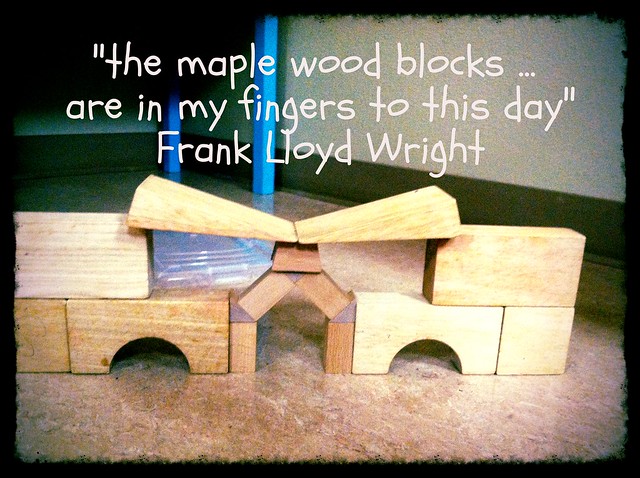
I might have thought we were well past the stage of using wooden blocks around here, now that there are legos and robotics kits and so forth ... but I would have been wrong!  With a choice to do a unit study on architecture this month, the need for "blocks that don't defy gravity" was expressed and we went back to the old wooden block bin (which had been donated to church but luckily could be borrowed back for a couple days mid-week without any problem).

Classic toys really will never go out of style.

block arch

Friday, January 9, 2015

My 2015 Intentions

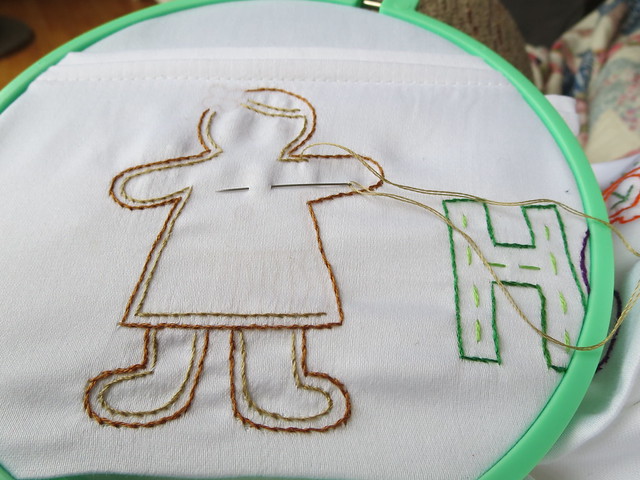
Embroidery

Happy New Year!  Time is still flying past me at a crazy speed, and in this first week back at work after the break I've had meetings or classes to teach every night of the week, so I'm late getting to this blog post that I meant to write first thing in the new year.

Which is both fitting and a little ironic in light of my Intention Setting for this year!  I decided that what I needed to focus on the most moving into this new year is

To live with attention to the little things that make my life the daily experience I want to live.  This means that I will make sure I'm comfortable, things smell nice, I'm eating well, getting enough sleep, living according to my values, and doing the little things (like reading and hobbies and exercise) that make up the texture of a life well lived.

In other words, I'm choosing to pay more attention to the background rather than the highlights.  I'm not setting any lofty goals or planning any big accomplishments or "once in a lifetime" peak experiences.  Those are fine and good every now and then, but the problem I encounter is that they add stress and can throw life out of balance.  I don't thrive on adventure and change, I thrive on routine and domestic chores.  And I want to thrive, not just "do well". 

This doesn't mean I'm quitting my job and becoming a homebody ... I love my work and it would crush some part of my soul to leave the work I do.  But even at work I want to focus more on the background feel of things and less on the big events. 

May we all live well, with the time that we have.

Tuesday, December 30, 2014

The End of the 2014 Reading Challenge: Close But Not Quite!

I'll be finishing this up during January, but darn, I really did come close!


The 14 x 14 in 2014 Reading Challenge

 
  • Pick 14 categories for your reading
  • Try to read 14 books in each category
  1. Religion, Ethics, Spirituality, and Philosophy
    1. What Money Can't Buy: the Moral Limits of Markets by Michael Sandel
    2. The Book of Job: When Bad Things Happened to a Good Person by Harold Kushner
    3. Reflections on the Psalms by C.S. Lewis
    4. How to Live in the World and Still Be Happy by Hugh Prather *(double dipper)
    5. Existentialism: A Very Short Introduction by Thomas R. Flynn
    6. When Spiritual but Not Religious Is Not Enough by Lillian Daniel
    7. Plato at the Googleplex: Why Philosophy Won't Go Away by Rebecca Goldstein
    8. Serving With Grace: Lay Leadership as a Spiritual Practice by Erik Walker Wikstrom (double dipper)
    9. Growing Souls: experiments in contemplative youth ministry by Mark Yaconelli (double dipper)
    10. Liberating Hope: Daring to Renew the Mainline Church by Michael S. Piazza and Cameron B. Trimble (double dipper)
    11. Reclaiming Prophetic Witness: Liberal Religion in the Public Square by Paul Rasor (double dipper)
    12. The First Christmas: What the Gospels Really Teach About Jesus's Birth by Marcus Borg and John Dominic Crossman
    13. Watch for the Light: Readings for Advent and Christmas
  2. Work-Related
    1. Serving With Grace: Lay Leadership as a Spiritual Practice by Erik Walker Wikstrom (double dipper)
    2. Leadership in Congregations by Richard Bass (editor)
    3. Teaching From the Heart: Theology and Educational Method by Mary Elizabeth Mullino Moore
    4. Growing Souls: experiments in contemplative youth ministry by Mark Yaconelli (double dipper)
    5. Liberating Hope: Daring to Renew the Mainline Church by Michael S. Piazza and Cameron B. Trimble (double dipper)
    6. Let Your Life Speak: Listening for the Voice of Vocation by Parker Palmer (* double dipper)
    7. Hope on a Tightrope by Dr. Cornel West
    8. The Artist's Way for Parents by Julia Cameron
    9. Sticky Church by Larry Osborne
    10. Reclaiming Prophetic Witness: Liberal Religion in the Public Square by Paul Rasor (double dipper)
    11. Universalists and Unitarians in America: A People's History by John A. Buehrens (double dipper)
    12. The Lives of Margaret Fuller: A Biography by John Matteson (triple dipper)
    13. The Gifts of Imperfection: Let Go of Who You Think You're Supposed to Be and Embrace Who You Are by Brene Brown (double dipper)
    14. The Art of Extreme Self-Care by Cheryl Richardson (double dipper)
  3. Poetry
    1. Sands of the Well by Denise Levertov
    2. Leaves of Grass by Walt Whitman
    3. Rumi by Rumi
    4. The Collected Poems by Sylvia Plath * (double dipper)
    5. The Collected Poems by May Sarton
    6. Old Possum's Book of Practical Cats by T.S. Eliot
    7. Dancing with Joy: 99 Poems edited by Roger Housden
    8. The Crooked Inheritance by Marge Piercy (double dipper)
    9. Ten Poems to Change Your Life by Roger Housden
    10. Risking Everything: 110 Poems of Love and Revelation edited by Roger Housden
    11. Ten Poems to Set You Free by Roger Housden
  4. Self-Improvement And Lifestyle
    1. The Superior Wife Syndrome: Why Women Do Everything So Well and Why -- For the Sake of Our Marriages -- We've Got to Stop by Carin Rubenstein
    2. Hands Free Mama: A Guide to Putting Down the Phone, Burning the To Do List, and Letting Go of Perfection to Grasp What Really Matters! by Rachel Macy Stafford
    3. How to Live in the World and Still Be Happy by Hugh Prather *(double dipper)
    4. Notes from a Blue Bike by Tsh Oxenreider
    5. The Backyard Cow: An Introductory Guide to Keeping a Productive Family Cow by Sue Weaver
    6. Finding Higher Ground: Adaptation in the Age of Warming by Amy Seidl *(double dipper)
    7. Let Your Life Speak: Listening for the Voice of Vocation by Parker Palmer (* double dipper)
    8. The Weekend Homesteader: A Twelve-Month Guide to Self-Sufficiency by Anna Ness
    9. Overwhelmed: Work, Love, and Play When No One Has Time by Brigid Shulte (Tripple Dipper)
    10. The Gifts of Imperfection: Let Go of Who You Think You're Supposed to Be and Embrace Who You Are by Brene Brown (double dipper)
    11. The Art of Extreme Self-Care by Cheryl Richardson (double dipper)
  5. Parenting
    1. How to Talk So Teens Will Listen, And Listen So Teens Will Talk by Adele Faber and Elaine Mazlish
    2. Cinderella Ate My Daughter by Peggy Orenstein (double dipper)
    3. Mindful Parenting by Kirsten Race, PhD
    4. Before They're Gone: A Family's Year-Long Quest to Explore America's Most Endangered National Parks by Michael Lanza *(double dipper)
    5. All Joy and No Fun: The Paradox of Modern Parenting by Jennifer Senior
    6. How We Love Our Kids: The Five Love Styles of Parenting by Milan and Kay Yerkovich
    7. Fed Up With Frenzy: Slow Parenting in a Fast Moving World by Susan Sachs Lipman
    8. How to Be the Parent You Always Wanted to Be by Adele Faber and Elaine Mazlish
    9. Maxed Out: American Moms on the Brink by Katrina Alcorn (double dipper)
    10. The Five Love Languages of Children by Gary Chapman and Ross Campbell
    11. Overwhelmed: Work, Love, and Play When No One Has Time by Brigid Shulte (Tripple Dipper)
    12. Slow Family Living by Bernadette Noll
    13. Free to Learn: Why Unleashing the Instinct to Play will Make Our Children Happier, More Self-Reliant, and Better Students for Life by Peter Gray (double dipper)
    14. The Sand Bucket List: 366 Things to Do With Your Kids Before They Grow Up by David Hoffman
  6. My Favorite Detectives
    1. Tears of the Giraffe by Alexander McCall Smith *(double dipper)
    2. Last Bus to Woodstock by Colin Dexter
    3. The Adventures of Sherlock Holmes by Sir Arthur Conan Doyle * (double dipper)
    4. The Cold Dish (Walt Longmire #1) by Craig Johnson
    5. The Maltese Falcon by Dasheill Hammett * (tripple dipper) 
    6. Dirk Gently's Holistic Detective Agency by Douglas Adams
    7. Hickory Dickory Dock by Agatha Christie
    8. Maisie Dobbs by Jacqueline Winspear
    9. The Art of the English Murder by Lucy Worsley (double dipper)
    10. Grave Secrets by Kathy Reichs
  7. Science and Psychology
    1. Back to Normal by Enrico Gnaulati, PhD 
    2. Situations Matter by Sam Sommers
    3. Six Degrees: Our Future on a Hotter Planet by Mark Lynas
    4. Before They're Gone: A Family's Year-Long Quest to Explore America's Most Endangered National Parks by Michael Lanza *(double dipper)
    5. Ungifted: Intelligence Redifined: The Truth About Talent, Practice, Creativity, and the Many Paths to Greatness by Scott Barry Kaufman
    6. Finding Higher Ground: Adaptation in the Age of Warming by Amy Seidl *(double dipper)
    7. The Story of Science: Aristotle Leads the Way by Joy Hakim (double dipper)
    8. Overwhelmed: Work, Love, and Play When No One Has Time by Brigid Shulte (Tripple Dipper)
    9. Pilgrim on the Great Bird Continent: The Importance of Everything and Other Lessons from Darwin's Lost Notebooks by Lyanda Lynn Haupt (Double dipper)
    10. The Edge of the Sky: All You Need to Know About the All-There-Is by Roberto Trotta
    11. Free to Learn: Why Unleashing the Instinct to Play will Make Our Children Happier, More Self-Reliant, and Better Students for Life by Peter Gray (double dipper)
  8. History
    1. American Nations by Colin Woodard
    2. Frozen in Time: The Fate of the Franklin Expedition by Owen Beattie and John Geiger
    3. A History of US: Making Thirteen Colonies by Joy Hakim
    4. A History of US: From Colonies to Country by Joy Hakim
    5. A History of US: The New Nation by Joy Hakim
    6. Story of the World: Volume One: Ancient Times by Susan Wise Bauer
    7. A History of Us: Liberty for All? by Joy Hakim
    8. The Story of Science: Aristotle Leads the Way by Joy Hakim (double dipper)
    9. Pilgrim on the Great Bird Continent: The Importance of Everything and Other Lessons from Darwin's Lost Notebooks by Lyanda Lynn Haupt (Double dipper)
    10. The Monuments Men by Robert M Edsel (Double dipper)
    11. An Indigenous People's History of the United States by Roxanne Dunbar-Ortiz
    12. Universalists and Unitarians in America: A People's History by John A. Buehrens (double dipper)
    13. The Lives of Margaret Fuller: A Biography by John Matteson (triple dipper)
    14. The Art of the English Murder by Lucy Worsley (double dipper)
  9. Books to Read Before You Die/LifeTime Reading Plan
    1. The Old Man and the Sea by Ernest Hemingway (*double dipper)
    2. Very Good, Jeeves by P.G. Wodehouse (it's not on other people's lists, but it's been on my TBR list since I was in college and I finally read it)
    3. Cloud Atlas by David Mitchell *(double dipper)
    4. The House of Mirth by Edith Wharton *(double dipper)
    5. The Adventures of Sherlock Holmes by Sir Arthur Conan Doyle * (double dipper)
    6. Cranford by Elizabeth Gaskell (* Tripple! dipper)
    7. The Maltese Falcon by Dasheill Hammett * (tripple dipper) 
    8. Three Lives by Gertrude Stein (double dipper)
    9. The Years by Virginia Woolf (double dipper)
    10. The Prime of Miss Jean Brodie by Muriel Spark (double dipper)
    11. Little Women by Louisa May Alcott (Triple Dipper)
  1. Children's Lit
    1. Squire by Tamora Pierce
    2. Lady Knight by Tamora Pierce
    3. The Burning Bridge by John Flanagan
    4. The One and Only Ivan by Katherine Applegate
    5. The Book of Three by Lloyd Alexander
    6. A Dog Called Homeless by Sarah Lean
    7. Flora and Ulysses: The Illuminated Adventures by Kate DiCamillo
    8. The Red Pyramid by Rick Riordan
    9. Throne of Fire by Rick Riordan
    10. Shadow of the Serpent by Rick Riordan
    11. Summer of the Gypsy Moths by Sara Pennypacker
    12. The Incorrigible Children of Ashton Place: The Mysterious Howling by Maryrose Wood
    13. The Incorrigible Children of Ashton Place: The Hidden Gallery by Maryrose Wood
    14. The Icebound Land by John Flanagan
  2. Books Made Into Movies
    1. The Great Gatsby by F. Scott Fitzgerald
    2. Ender's Game by Orson Scott Card
    3. Horns by Joe Hill
    4. The Old Man and the Sea by Ernest Hemingway (*double dipper)
    5. Divergent by Veronica Roth
    6. Cloud Atlas by David Mitchell *(double dipper)
    7. The Fault In Our Stars by John Green
    8. The Book Thief by Markus Zusak
    9. The Maltese Falcon by Dasheill Hammett * (tripple dipper)
    10.   Gone Girl by Gillian Flynn
    11. The Monuments Men by Robert M Edsel (Double dipper)
    12. Little Women by Louisa May Alcott (Triple Dipper)
    13. If I Stay by Gayle Forman
  3. Recreational Reading
    1. The Testing by Joelle Charbonneau
    2. Insurgent by Veronica Roth
    3. Allegiant  by Veronica Roth
    4. The Ocean at the End of the Lane by Neil Gaiman
    5. The Battle for Skandia by John Flanagan
    6. The Sorcerer of the North by John Flanagan
    7. The Siege of Macindaw by John Flanagan
    8. Erak's Ransom by John Flanagan
    9. The Kings of Clonmel by John Flanagan
    10. Halt's Peril by John Flanagan
    11. A Discovery of Witches by Deborah Harkness
  4.  Around the World/Book Lust to Go
    1. Book Lust To Go: Recommended Reading for Travelers, Vagabonds, and Dreamers by Nancy Pearl
    2. Three Apples Fell From Heaven by Micheline Aharonian Marcom (Armenia)
    3. Tears of the Giraffe by Alexander McCall Smith (Botswana) *(double dipper)
    4. Beauty Tips from Moose Jaw: Travels in Search of Canada by Will Ferguson (Canada)
    5. Number the Stars by Lois Lowry (Denmark)
    6. Cranford by Elizabeth Gaskell (England) (* Tripple! dipper)
    7. Your Presence is Requested at Suvanto by Maile Chapman (Finland)
    8. The Guernsey Literary and Potato Peel Pie Society by Mary Ann Shaffer and Annie Barrows (Guernsey)
    9. The Piano Teacher by Janice Y.K. Lee (Hong Kong)
    10. Caspian Rain by Gina B. Nahai (Iran)
14.  Women's Studies
    1.  The House on Mango Street by Sandra Cisneros
    2. The House of Mirth by Edith Wharton *(double dipper)
    3. Bossypants by Tina Fey
    4. The Collected Poems by Sylvia Plath * (double dipper)
    5. Cranford by Elizabeth Gaskell (* Tripple! dipper)
    6. Three Lives by Gertrude Stein (double dipper)
    7. The Years by Virginia Woolf (double dipper)
    8. Cinderella Ate My Daughter by Peggy Orenstein (double dipper)
    9. Maxed Out: American Moms on the Brink by Katrina Alcorn (double dipper)
    10. The Prime of Miss Jean Brodie by Muriel Spark (double dipper)
    11. The Crooked Inheritance by Marge Piercy (double dipper)
    12. Little Women by Louisa May Alcott (Triple Dipper)
    13. The Lives of Margaret Fuller: A Biography by John Matteson (triple dipper)